Monday, September 28, 2015

The Far Side of Eden 17: Democracy!

Note: This series of excerpts from my second Napa book begins with the June 2015 postings in the menu to the right.                                           


      KATHRYN WINTER received a telephone call from a friend in Napa. This friend informed her that a woman was going around Kathryn’s district saying she was running for supervisor and talking about “saving the hillsides.” Kathryn made some calls and learned that the woman was Chris Malan. She couldn’t believe it. Why would Chris undertake anything so reckless? She telephoned Chris and asked if she was running, and Chris said yes, just to keep the hillside issue before the public. Kathryn asked her to come to her condo off the Silverado Trail so they could discuss the matter, thinking there was still time to get a handle on this.
      A fourth-generation San Franciscan, Kathryn had grown up in the Central Valley and witnessed the destruction of farmland there and near Chico, where she had taught school for a time. She deplored what had transpired around Stanford University, with the proliferation of the computer companies, and didn’t want something similar to happen to Napa Valley.
      Her voting as a supervisor indicated this, but she was an environmentalist with a small e. She had carefully distanced herself from the more radical elements of the movement, and her refusal to appoint Chris to the Watershed Task Force had proven this. The decision irked Chris, but it was done in good faith because Kathryn wanted the task force, an experiment in civic cooperation, to work. Chris’s presence was always polarizing.
      Although Kathryn had supported the moratorium on new steroid houses in the hills, she had refused to oppose all vineyard development up there. She had joined with others in condemning the Sierra Club lawsuit as divisive and potentially damaging. There was so much at stake, not the least of which was Kathryn’s job, and Chris had to be made to understand this.
      She didn’t show up for the meeting. Kathryn was scheduled to go door-to-door canvassing with a local supporter at lunchtime, and had to cancel. That was a squandering of valuable support, but she figured the meeting with Chris was more important.
      The longer Kathryn waited, the angrier she got. Finally Chris arrived, three hours late, having been up in an airplane, leaning out the window taking more photographs of hillside destruction. All over the valley now, whenever people heard or saw a helicopter, they said, “There’s Chris Malan,” and often it was. Cold, tired, in a foul mood, Chris told Kathryn, without preliminaries, “I’m running against Bill Dodd, not against you.”
      Kathryn pointed out that Chris would in fact be running against both of them. Doing so, she would split the environmental vote and perhaps siphon off enough of it to force the election into a runoff. Possibly—unthinkably—she could throw the whole thing to the Chamber of Commerce candidate at the outset. Kathryn assured her that, after the election, she would sit down with her and work out a plan for the watershed, if only Chris would reconsider.
      But Chris didn’t seem to be listening. She said she wouldn’t run if Kathryn signed a piece of literature calling for tough new regula tions for the hillsides, and if she put together a meeting with the big vintners and brought Chris along to talk to them about the problems. Kathryn said she would think about it, knowing that such a meeting would be a fiasco, that it would lose votes, not gain them.
Chris seemed to her intransigent, dogmatic, either misunderstanding the consequences of what she was doing or indifferent to them.
      Kathryn had been carrying water for the environmentalists for years. Now, when she needed them, Chris was threatening to turn the election into a personal vendetta against her and everyone who had, at one time or another in the past, dismissed her or simply not gone along with some aspect of Chris’s agenda. Kathryn thought this was the result of several things: Chris’s exposure in the media, the strong reaction to the Sierra Club lawsuit by everybody from the county counsel to the Napa Valley Vintners Association, the heady rush of power, and Chris’s access to Mennen money.
      Chris’s ultimate goal, Kathryn now believed, was not a moratorium on new hillside development but an end to all agriculture in the hills, period. That, or nothing. Win, or take the ship down in a blaze of self-destructive glory.
                                                 *
      Everyone was calling, telling Chris not to run. This included even her friends in the Sierra Club. She told them, “Dodd won’t win.”
She had talked to him, she added. Dodd didn’t know diddly about the hillsides. “Who will be in the runoff?” Chris then asked, and answered her own question. “Kathryn and Dodd, that’s who.” And then Chris would work for Kathryn during the runoff campaign; she would keep the hillside issue before the public, going door-to-door, as she was doing now, saying, “Let’s talk, people.”
      In the end, Kathryn would be reelected because voters hated development in the hills. No one would be able to deny why Kathryn had been reelected—the hills!—least of all Kathryn Winter.
Volker Eisele called and argued with Chris. She could well get Kathryn defeated, he told her, which would be a major environmental disaster. When she disagreed, Volker shouted at her. She didn’t know what she was doing, he said; her motives were murky. Chris hung up thinking Volker was too close to agriculture.
      She got a call from Ginny Simms, a fellow member of Friends of the Napa River with whom Chris had worked on other projects. They were both totally committed, and they met and talked for two hours. Ginny was a walking database who worked on elections all the time, but she admitted that she didn’t know a lot about the watershed. She vowed to work for it anyway if Chris would just reconsider. “Don’t run against Kathryn,” she pleaded.
      “Kathryn won’t do what’s needed,” Chris told her. Kathryn would have to agree to walk door-to-door with Chris, handing out the signed literature denouncing hillside vineyards, before Chris would consider withdrawing her name. Ginny said she would talk to Kathryn about this possibility. “I’ll get back to you on that,” she added, but she never did.
                                       (Next: Wash-up)                                                                 
               
To see my bio, click on:
To order Napa:

Monday, September 21, 2015

The Far Side of Eden 16: No prisoners

Note: This series of excerpts from my second Napa book begins with the June 2015 postings in the menu to the right.                                                                                                                
   
      The primary election was only a few months off, but first there were some people Chris Malan wanted to consult. One was Peter Mennen. He and Carlene had become a major force in Chris’s life; after years of struggling, penniless, for causes she believed in, against people whose motives she considered bad and whose financing was limitless, she had suddenly found money—money!—for monitoring, for scientific studies, for lawsuits, and maybe more. It was a wonderful, heady feeling, and she didn’t think it would end. With confidence she telephoned Peter and told him she wanted to run for Kathryn’s seat, adding, “If you have a problem with that, please let me know.”
      He said, “Let us know if we can help.”
      The other person Chris called was Parry Mead. The Mead ranch, just up Atlas Peak Road from the Malan property, provided an example of the alternative to full-scale development. It was there, around the forty-five-acre vineyard set in the middle of thirteen hundred acres of remote, rugged, often precipitous country, that Chris and Parry often walked and talked. They were close friends, two women in their forties, mothers active in caues that often took them far from home. As fellow members of the Watershed Task Force, they had resisted pressure to acquiesce in the demands for more latitude in developing vineyards, for “progress,” but their styles were very different.
      So were their pasts. Parry considered herself a moderate and thought her history as an activist showed this. She and her father, Giles, sat on the board of their own foundation, which was dedicated to environmental causes. But it did not operate in the manner of the Mennen Foundation, and its goals were different. Giles Mead lived in the original stone ranch house built at the turn of the century, Parry in a modern house nearby, next to one of the old barns. The vineyard provided income to run the ranch. The Meads had placed an easement on the property through the Land Trust of Napa County to prevent it from ever being developed, and they had donated a million dollars to the Land Trust to continue its work. The Mead Foundation funded a variety of projects around the country that either directly effected good land use or broadened knowledge of it. Although the Meads didn’t sue, they put their money where their mouths were, as Parry liked to say.
       For years, in the mornings, she and Chris had walked and hashed out what they saw as a likely future for the valley. They held differing views, however, and agreed never to let this or their divergent politics affect their friendship.
      The possibility of the Sierra Club lawsuit, long before it was filed, had been a topic of discussion. Pressure had to be exerted on the county to bring about change, they had agreed, but legal action should be held in abeyance until it was clear that the task force was unable to bring about change. But by the end of the first phase, Parry had realized more had to be done. She and Giles had met with the Mennens, their lawyer, and Chris at a restaurant in Calistoga, to discuss the pros and cons of going to court, and the Meads, father and daughter, decided not to take part in the suit.
      But Parry hoped to moderate reaction to it. As a member of the task force, she could point out that blame should not be assigned just to the wine industry but should be shared by the developers and by the cities—by everybody, in fact. What was happening to the hills and the river was a community responsibility. Parry wanted rules laid down for everybody to observe, but she also wanted a reconciliation among vineyardists, environmentalists, and conservationists.
      Chris’s actions sometimes got in the way of what she and Parry wanted to accomplish. The Mead Foundation paid to have a scientist come down from Oregon to study the river and its tributaries and report to the county and to the task force. His name was Charley Dewberry, and he had been well received. Then Chris had employed him to conduct a separate study for the Mennens, under the auspices of Friends of the Napa River. Predictably, Stu Smith and Dennis Groth claimed Dewberry was tainted and shouldn’t be heeded in his prescriptions for the river’s recovery. Parry had publicly defended the scientist, but the men on the task force drove the issue into the ground. After that meeting, Parry went to Chris and said, “This is awful, we lost credibility,” but Chris didn’t seem to care.
      “She was so passionate, Parry thought. And Chris’s focus was so tight. What resulted from such fervor was often tunnel vision.
                  (Next: The election that could have been)                                                         
           
To order my book of travel essays go to:

Friday, September 18, 2015

Waiting for the fire...

had its moments at Dunn Vineyards, Howell Mountain, Napa Valley:                                           


    Serious water dispersal will be needed if the fire does arrive, more water than is easily imagined up here, and moveable. Near the winery and office is a classic red - well, faded mauve - International fire engine built in 1947 by Van Pelt of Oakdale CA (“since 1925”), an elegant conglomeration of red domed lights, old cloth hoses folded and stacked like hundred-foot pythons, rubber hoses on hand-rolled wheels, spidery railings, various accoutrements out of a Buster Keyton adventure, and an eight-hundred-gallon water tank Randy now fills with a big plastic pipe running down from the well’s concrete collecting tank.
   Randy bought the engine as is from Mike Robbins long ago, when the owner of Sprng Mountain Vineyards - aka Falcon Crest - was in bankruptcy despite the success of a vinous soap opera as bad in the way of Dallas. The transmission was jammed and Robbins agreed to take $1,500 for this classic, so Randy borrowed a crowbar, got it running in ten minutes, and drove up Howell Mountain. In those days he looked a lot like Robert Redford - same beard and strawberry blonde hair - and that day he parked it in the field south of the house where it has mostly lived, until potential disaster brought it forward.
    The engine mounted on the back pumps to the big hoses. It has a choke and primer, and pushing the button precipitates some choking noises and a blast of black smoke. Then the motor turns over with authority, filling the afternoon with the resonance of old-timey, unmuffled America. Some flat cloth hoses are pulled out onto the grass, up the stairs and across the office porch. They expand as the engine pumps in water, the nozzle - sculpted brass, a work of art in its own right - for one frightening moment before the motor’s shut off blasts a torrent as thick as a man’s arm, barely uncontrollable.
        The smaller rubber hoses emit streams of water less likely break windows. That pump’s run off the main engine, so Randy gets it running, too. The rubber coils throb as they come off the roller. Pull the fancy nozzle’s trigger and a shaft of water ascends vertically halfway up a towering Doug fir.                                                

                                
   Night falls, and the fire's still a threat. The sign on the shed, put together by a friend out of vintage neon glass, says it all: Wine.                       

Sunday, September 13, 2015

The Far Side of Eden 15: Divide and Fall

Note: This series of excerpts from my second Napa book begins with the June 2015 postings in the menu to the right.                                         

                                      
      PEOPLE ASKED Chris Malan what effect the Sierra Club lawsuit would have on the Watershed Task Force. Wouldn’t it override any recommendations the task force might come up with, and thereby short-circuit the process of making better law?
      She argued that there were two distinct issues involved: the lawsuit, which was about environmental law, and the task force, which was about land use. Eventually, she said, one would complement the other. County officials were unofficially telling anyone seeking an erosion control permit for a new vineyard that approval would be difficult to obtain before the suit was resolved. So in this way Chris had managed to shut down hillside vineyard development, accomplishing at a stroke what she thought the supervisors should have done a long time ago.
      She told her critics, and they were legion, that if a moratorium had been put into effect earlier, to last only until scientific studies of the river could be completed, none of this would have happened. But the supervisors wouldn’t act.
      When a clear problem exists, she pointed out, elected officials are supposed to stop activities, whatever they are, until informed decisions can be made. A dirty river and reservoirs full of silt are clear indications of a problem, but such a rational step as delaying development until the answers could be found was not feasible in this, the most profitable of wine countries.
      The Mennen Environmental Foundation’s strategy was more far-reaching than those outside its tight circle of strategists could imagine. Chris didn’t talk about this for the obvious reason that surprise was a crucial part of success. The strategy included more lawsuits— possibly requiring a cumulative impact study, requiring setbacks from streams and the river, challenging water allotments—and proposing an initiative on hillside development. So many fenders, so little time.
      While these possibilities were researched and weighed, the anger directed at Chris from the outside was palpable. Her enemies on the task force demanded that she resign. When she refused, they took the demand to the county counsel, who said she couldn’t legally be removed. Stu Smith, Dennis Groth, and the others were stuck with Chris Malan and her belted raincoat, her carryalls full of documents, her steely but still pretty smile. And the Sierra Club lawsuit continued.
      The individual defendants—Jayson Pahlmeyer et al.—were in their turn suing the county, claiming the permits they had been issued were illegal because they hadn’t been subjected to the California Environmental Quality Act. Therefore, they argued, the county should pay any and all damages, a highly ironic situation, since the county and the developers had been cohorts. Now they were adversaries.
      Pahlmeyer and the others were eager to settle with the Sierra Club. Their lawyers were saying, in effect, “Tell us how much money you want, and let our clients get back to work.” Tom Lippe wanted to take the money and move on to the next stage—suing the county for failing to do an environmental impact study, say—but Chris told him, “Hold on.” She and the Mennens had another idea.
The defendants were using what was known as the laches defense, implying an unfair seizure of assets. Their claim was that they would suffer undue financial loss from the suit because of work already under way, and that land graded and ready for planting when the suit was filed was theoretically exempt from CEQA.
      All right, thought Chris. But not those areas where they were just beginning to work, where they were still removing trees and vegetation and making roads. Forty-three of Pahlmeyer’s acres were involved in this stage, and smaller plots belonging to Potelle and Stotesbury, all pieces of larger developments. So she said to Lippe and to the Mennens, “Let’s go up and see how much work they’ve actually done.”
      Lippe argued in court that a laches defense allowed his client, the Sierra Club—but in reality, Chris—to go in and inspect the properties in question, to measure slope and get soil samples and other information to see how much work had really been completed, to see if there was an additional threat to the environment. What Tom Lippe didn’t say was that such access to the properties might provide evidence to be used in future lawsuits over the type and degree of development there. The defendants objected to the Sierra Club traipsing all over their land, but the judge overruled them, and soon Chris, a scientist, and other people were up there poking around and measuring and photographing, driving their adversaries wild.
                                                      *
      Settlement talks between the county and the Sierra Club were not easy. In essence, the county was waiting to be told what Chris and Lippe—and by extension the Sierra Club—wanted, and had the impression that the plaintiffs didn’t really know. They apparently had no exit strategy. The Sierra Club could at that point have demanded almost anything, and gotten it. But then Chris would no longer have the issue, and the public might lose interest, and so the suit would proceed.
      The Napa County counsel said that if the lawsuit made it all the way to court, and the Sierra Club won, the county might simply rewrite the hillside ordinance, making it weaker. They would make it so weak that CEQA wouldn’t even apply. This would effectively break the state’s environmental club, and the county would be free to regulate, or not, in the hills.
      Chris and Tom Lippe went out into the hall, and the attorney asked her if the county would actually do that, and she said, “Yes.“ If the wrong people gained control of the board of supervisors, the board could tell the county counsel to change the ordinance, making it ministerial rather than discretionary. This bureaucratic sleight of hand would permit a rubber stamping of erosion control permits, and then they wouldn’t be subject to CEQA. All this discussion of runoff and tough standards would be rendered moot.
      Nothing was resolved that day, but Chris walked out of the settlement talks determined to run for the office of supervisor herself. She had seen her opportunity: put the hillsides on the table in a big way, because the other candidates weren’t talking about them.
      The damage up there was pervasive, and the county’s continuing boom assured even more destruction. She would charge the supervisors with taking cover behind the Watershed Task Force, and that included Kathryn Winter. Chris expected her to back some Band-Aid approach when the task force finished its deliberations the following summer; the county would announce that its “experts” had determined what was needed, and dissenters would have to eat their objections. Well, Chris wasn’t eating anything. And she wasn’t waiting, either.
                            (Next: To run or not to run)
                                                                                *
To order my novel, Nose, click on:  

Tuesday, September 8, 2015

Drink: It ain't your Papa's Ketchum

                                                                      
     Inadvertently on the Basque trail (see previous post), I went through Ketchum (aka Sun Valley) and stayed within a stone's throw of Hemingway's old house. Stopped by his grave in the cemetery on which lay the decapitated body of a chipmunk, probably hit by an owl, an appropriately savage trope. However, not much else in that town resonated, with its boutiques and stylish, well... everything. The closest thing I found to his brand of saloon was Grumpy's - beer in schooners, wall of cans, the un-photographable cadaver of a sailfish above the stove, and a very talented woman dancing on the bar.
     Just north of Ketchum, over Galena pass, is Frenchman's Creek where I once spent time with a Basque sheep herder and learned a lot about independence and job satisfaction: https://www.blogger.com/blogger.g?blogID=5505515248189957268#editor/target=post;postID=7236255497963596789;onPublishedMenu=allposts;onClosedMenu=allposts;postNum=82;src=postname                                                                       


http://www.amazon.com/The-Kingdom-Country-Journey-American/dp/098972557X/ref=as_sl_pc_tf_til?tag=fearleinter-moutannssbooks-20&linkCode=w00&linkId=&creativeASIN=098972557X


Friday, September 4, 2015

Go: A desert inn out of time, and not one you've heard of

            If you find yourself driving across northern Nevada on Interstate 80 - and who doesn't eventually? - then get off in Elko.                            

                                                                      
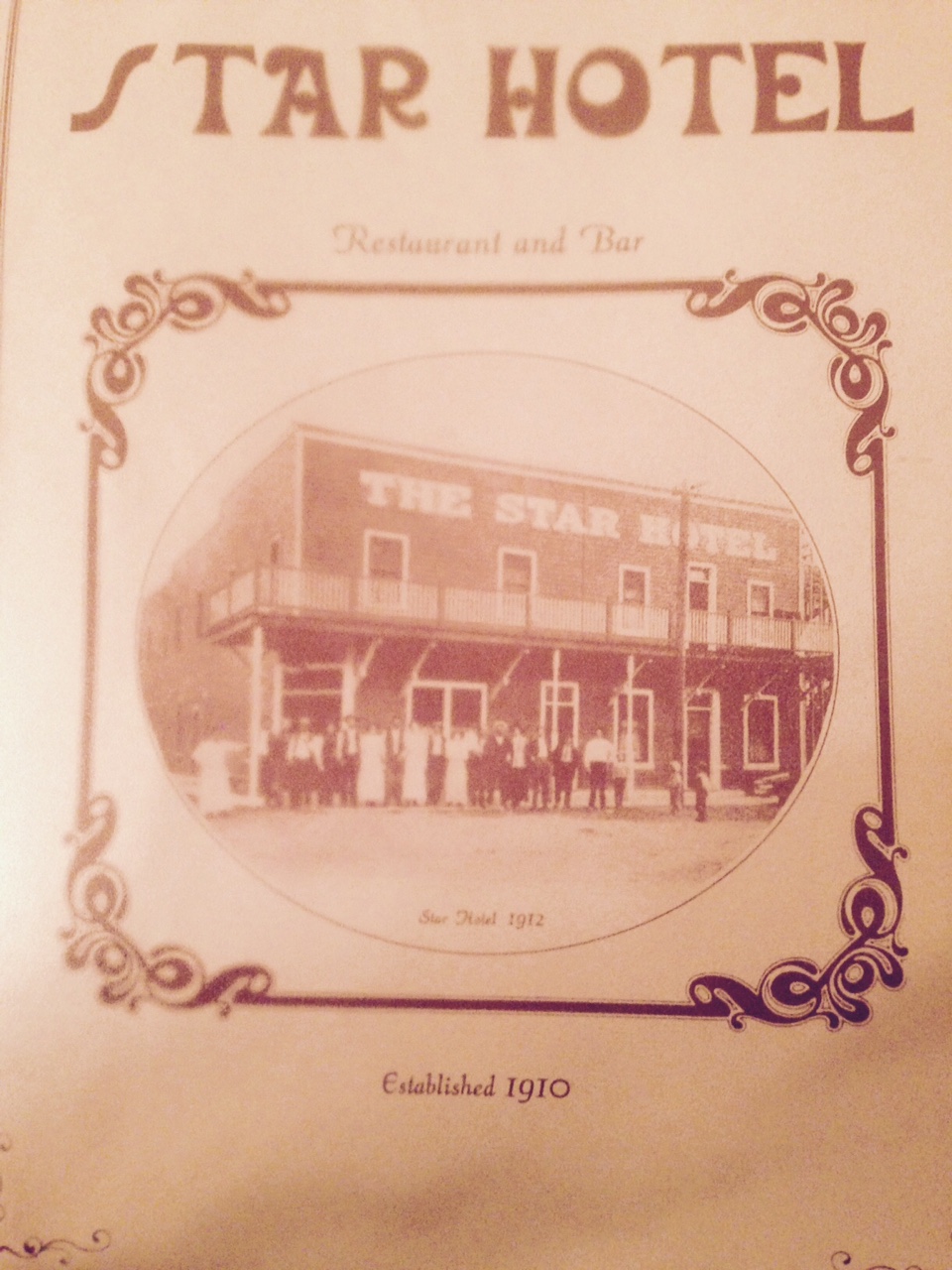
           The state's most famous Basque restaurant among Nevadans hides itself behind the usual chain of horrors that is road travel in America today. The Star Hotel was founded by and for Basques and their progeny who came to this part of the west as sheepherders in the early years of the 20th century. Family style, fresh vegetables wonderfully cooked, beef and chicken amidst mostly regulars who have found themselves fans of Basque culture through the stomach.                                                                 
For more on Basques in Nevada and Idaho, and other inter-mountain travels, see my book The Kingdom in the Country:

Saturday, August 29, 2015

Always wanted to live in a trailer

Now I have a lovely Spartan Manor with great neighbors except for the wild hogs that occasionally up-root the front yard                                                                                  
        High in the hills of east Napa, I have begun research for my new book about the valley. It's to be the third and final volume and will deal with, yes, cult cabernets and vinous glitz, but also with the first agricultural preserve in America, a real and quite special place hanging in the balance between nature and development.
        I work with a view of the southern Mayacamas mountains, in a kind of land-boat with vintage blonde panelling built in the '40s in far-off Tulsa, Oklahoma. 
       Do drop by: conawayjim@gmail.com                                       


(Next month: The Far Side of Eden Part III: Divide and Fall)
*


 To order my novel, Nose, click on:  
http://www.amazon.com/Nose-Novel-James-Conaway/dp/1250006848/ref=sr_1_1?s=books&ie=UTF8&qid=1362180145&sr=1-1&keywords=nose 

Sunday, August 23, 2015

The Far Side of Eden 14: Muir Redux

Note: I recently acquired the rights to my second Napa book, The Far Side of Eden. I think the struggle over the hillsides at the outset of this century covered in the book is relevant to the current discussion of development that includes new wineries and winery expansions, and I decided to run excerpts here. The series begins with the June postings in the drop-down menu to the right.                                                 


      Environmentalists in Sonoma were jealous of the resources available to environmentalists east of the Mayacamas. The Napans’ influence over the regional environment rankled the Sonomans, just as the high prices paid for Napa wine rankled Sonoma’s vintners. The Redwood chapter resented the funding available in Napa, and the fact that the Napa group would get even more attention.
      Carlene Mennen thought some members of the Sierra Club in Sonoma were too close to the industry. They had gotten the ear of the Sierra Club’s lawyers in San Francisco and were trying to kill the suit there. The whole question of so-called radical action was complicated by warring sentiments within the Sierra Club membership, some veterans demanding an end to logging in the national forests and others, including the club’s leaders, holding a more accommodating view of the use of public lands.
      This difference of opinion had resulted in a schism, the apostate group calling itself the John Muir Sierrans, which included the legendary David Brower, a mountain climber and veteran environmentalist. The leadership of the Sierra Club denounced the John Muir Sierrans as unruly and characterized their movement as an illegal “fire in a trash can” rather than a serious attempt to get back to the club’s roots.
      At the same time, the leadership was tightening control over individual cadres and strongly discouraging activities at odds with official policy. In the middle of all this the little Napa group arrived with a lawsuit and the money to pay for it, the target being a highly celebrated and influential industry that ordinary people did not associate with environmental degradation. The lawsuit could easily make the club sound radical, if not downright John Muir Sierran, the opponents of the suit argued. The battle, after all, was over a relatively insignificant, glitzy piece of real estate where, as some Sierra Clubbers said privately, “the resource is already lost.”
      The same people feared that actions like the Napa group’s could lessen support for the club, and for environmentalism in general, at a crucial moment when a presidential campaign was under way and there was a good chance of placing a true environmentalist, Al Gore, the current vice president, in the White House. Gore was being challenged by the Green Party candidate, Ralph Nader, and the Sierra Club grappled with a decision about which man to endorse. All this demanded caution and restraint.
      Carlene had not joined the Sierra Club until 1997. By then the Mennen Foundation had been in existence for a couple of years and she had had the opportunity to appraise several of the big environmental organizations. Some were good and some were death stars, absorbing contributions to pay big salaries and working against sound ecology and biological integrity. The Sierra Club was one of the good ones, she thought, but like all bureaucracies, it had to be watched.
      Sizable donations had put her on the club’s National Advisory Council, something those in the Redwood chapter didn’t know about. Money enabled her, sitting at the barn-gate table on Sylvaner Avenue, under the elkhorn chandelier, to pick up the telephone, immediately reach a lawyer in the Mission District headquarters, and have a meaningful conversation. She then telephoned Bill Yeates in Sacramento and asked him to make the same call.
                                                   *
      All summer Chris Malan videotaped activity on the Pahlmeyer Post-it. By the end of August the ground was bare and the last of the vines were going in, the heavy equipment shuttling back and forth, dust plumes rising. It was dry, dry as only the air can be when the wind blows from the desert.
According to existing regulations, all such work was supposed to stop by the first of September, but the work didn’t stop. Chris gave the workers a little more time and then, over Labor Day weekend, decided to act. She knew the ropes well enough by now to get a response without having to go through the county planning department, and she called the sheriff. He went up and shut the operation down until the following Tuesday, when it could be reviewed by the appropriate authorities, but by then the story was in the press.
      Jayson Pahlmeyer claimed to have obtained oral permission to continue working for a few days, until the grapes were finally planted, but the project stayed on hold. Most of the work was done, but once again his cowboys had run up hard against a deadline, prompting angry comparisons with the Viader vineyard (see The Far Side of Eden 1, at right) of the decade before and setting the stage for what was to come.
      Two weeks later, Tom Lippe drove up to Napa and walked into the courthouse, located between the county administrative building and the district attorney’s office. There he filed suit on behalf of the Sierra Club against Napa County for failing to enforce the California Environmental Quality Act, and he filed suit against the three individual defendants for putting in their vineyards.
      The fat was in the fire.
  (Starting next month: part III of The Far Side of Eden: Divide and Fall)       
                                                      *
   To order my memoir, go to: http://www.amazon.com/Memphis-Afternoons-James-Conaway/dp/0989725553/ref=sr_1_1?s=books&ie=UTF8&qid=1439940934&sr=1-1&keywords=memphis+afternoons                          
          

Wednesday, August 19, 2015

Here's to my father's favorite drink

From the New York Times
TRAVEL
By James Conaway


Photo

Rail bridge in Frankfort Kentucky. CreditRobert Rausch for The New York Times 

I grew up in Memphis with a faint tantalizing aroma emanating from my father’s whiskey glass.
He drank Kentucky straight bourbon, not its first cousin, Tennessee whiskey, made according to stricter rules and, Dad thought, too sweet.
His brand was the utilitarian Jim Beam, at a time when bourbon was much less popular than scotch, gin and vodka and no one anticipated that its renewed popularity would reach as far as India, China and beyond.
Recently I decided to explore the making and terrain of Dad’s chosen drink in central Kentucky, where thoroughbred racing has a real competitor in the booming distillery tourism trade.
Along with my wife, Penny, a Long Islander but no stranger to fermented corn, we drove from Washington to Lexington, Louisville and points south, hoping to learn more about the area’s often-cited drink of choice, and maybe to find an artisanal whiskey-maker not yet famous.
We began, appropriately, in gorgeous horse country near Versailles, a manicured landscape of big estates and bored-looking horses grazing about (like Napa Valley with lush fields of bluegrass instead of vines).
In fact, bourbon and horses do have something in common: Both need good water. Filtered through limestone, it picks up lots of calcium that builds strong bones for the horses, and sheds elements like iron that affect the taste of whiskey.
Woodford Reserve, the official bourbon of the Kentucky Derby and no secret, sits at the end of a narrow road. There were once 2,000 distilleries in this state, but bourbon’s precipitous decline in the mid-20th century with the rising popularity of vodka and other spirits caused the long-ago owner of Woodford Reserve, deep-pocketed Brown-Forman (which also owns Old Forester, Jack Daniel’s and Southern Comfort), to sell it.


Photo

Filled barrels from the still house at Woodford Reserves in Versailles Kentucky.CreditRobert Rausch for The New York Times 

Then in the late 1980s, when tastes started to change again and bourbon began to rally, Brown-Forman bought the distillery back and recast its Kentucky limestone compound as a squeaky-clean corporate showplace.
The rack house where oak barrels are stored suggests a 19th-century white-collar prison but the bars on the windows were meant to keep people out, not in. Undisturbed, whiskey releases its “angel’s share” (the natural process of evaporation as it ages in barrels) and acquires its taste from the wood and white corn, what our tour guide called “an American crop.”
Woodford Reserve struck me as close to Tennessee whiskey because of its sweetness but was well made and redolent of the charred staves and caramelized sugar I had smelled as a child. For $10,000, we could have bought a whole 50-gallon barrel and put our names on the wall alongside luminaries such as Papa John of the pizza chain and Russell Crowe.
Buffalo Trace, a few miles north in Frankfort, reflects bourbon’s more realistic history as a big rough-and-tumble Dickensian enterprise. The dingy but romantic brick rack house towered over the parking lot, and the smoke- and steam-puffing whiskey works exhaled the powerful essences of cooking grain.
Claims of being the oldest distillery in Kentucky are too numerous to list, but Buffalo Trace seemed a good place to start; it embodies some of bourbon’s bad-boy image, too. A former employee had recently been charged with stealing barrels of the very expensive Pappy Van Winkle brand.
There were a dozen pilgrims on our tour, mostly men from the deep South where allegiance to bourbon is the strongest. Fred, our genial guide, led us up steep, exposed stairs; past smoldering cookers of blended lots of corn, rye and wheat; and invited us to drag a finger through the yellow froth atop a thousand gallons of bubbling mash that had been inoculated with yeast.
From these cedar fermenting tanks, the nascent bourbon flows to big stills, where it is cooked and the released steam is condensed into pure, transparent whiskey.
The 180-odd proof clear whiskey (known here as “white dog”) passes through the glass for inspection, before being diluted with water and put into barrels where it will acquire its character and color.
Fred explained the local derivation of proof: A pinch of gunpowder was ignited in a fresh batch of whiskey to prove to potential buyers that it had the Kentucky kick. “And too bad for the whiskey-maker if it didn’t burn.”
That night we encountered our first example of Kentucky cuisine, at Serafini bar and restaurant in Frankfort, where a shot of the Pappy Van Winkle costs $100. Farther west, the Hot Brown (sliced turkey on bread covered with cheesy Mornay sauce) was invented at the Brown Hotel in Louisville.


Photo

Fried Green Tomoatos with Roasted peppers and tomatos jam at Serafini in Frankfort Kentucky.CreditRobert Rausch for The New York Times 

And be aware that Kentucky bourbon and chocolate go into many a pecan pie, like the one in Rick’s White Light Diner, a haven of transplanted Cajun-cum-Southern fried above the Kentucky River in Frankfort.
Breakfast at the Jailer’s Inn in Bardstown involved cheese — lots of it. Jesse and Frank James once stayed here, though not as inmates. We were offered an overnight in a cell but chose a bedroom instead.
Also in Bardstown, the Oscar Getz Museum of Whiskey History is a grand old building, once an orphanage and later a Catholic prep school, that is stuffed with memorabilia and wonderful tributes to bourbon’s glory. There you can find old copper stills and a glass forest of bygone bottles, as well as a framed statement of Abraham Lincoln’s deploring the idea of Prohibition.
At the end of a dirt road on the outskirts of town, sepulchral-looking rack houses with dark slot windows and peaked roofs offered a sobering view. Paradoxically, this is home to Willett, a hot boutique producer with a wide reputation for spicy, many-layered complexity. In the little sales room, scrawled on a blackboard was the message that customers would be allowed only two bottles each of Willett’s single-barrel releases, aged 10 years or more, priced from $100 to upward of $300.


Photo

Still at Willett Distillery in Bardstown Kentucky. CreditRobert Rausch for The New York Times 

Willett makes very little of these rare vintages, and buyers sometimes flip them to bars and restaurants at much higher prices. Fans expect to find them on carefully perused lists, said Mitch Smith, the combination salesman and tour guide. “Those two drove down from Louisville this morning,” he said, indicating two millennials in crisp poplin shirts at the cash register.
In the nearest rack house was the metal scale for weighing casks that had been used by the family since Thompson Willett founded the company in 1936. Old stencils for marking barrels lay on a bench. Two hams hung ghostlike amid the barrels, soaking up the angel’s share in dim amber light, an experiment to see if the meat picked up the bourbon essence.
Penny and I drove west a bit to check out the family carnival that is the modernized Jim Beam distillery, a slick marketing scene my father wouldn’t have appreciated, and a similar one at Maker’s Mark, where buyers can seal their own bottles with molten red wax. Both places also sell all manner of things, including clothes, that really have nothing to do with bourbon in the glass.


Photo

Emptying barrels at Jim Beam in Clermont.CreditRobert Rausch for The New York Times 

Still, Jim Beam and Maker’s Mark were big players in reviving the bourbon business, in part through modern marketing and by capitalizing on ancillary products associated with their brand.
From there we drove southeast through countryside less manicured but no less appealing; a sign told us Jesus was coming (“Are you ready?”), and ubiquitous limestone showed along the road. Meadows appeared to be blond in the sunlight, and black trunks of hardwoods were mounted on sides of the hollows.
Oaks like these are made into staves, most from faraway Arkansas but also from Kentucky. The most prized come from the highest trees, where they’re stressed for water, have a tighter grain and impart more flavor.
At the Independent Stave Company in Lebanon, we watched a barrel-maker work in a sea of sawn oak and metal hoops, smelled the new wood and felt the distinctive “alligator” char that was burned into the staves.
The process is an essential element in understanding bourbon and the culture so dependent upon it, and experiencing this brought home the importance of craftsmanship in the bourbon world. Like wine, whiskey gets much of its taste from the species of oak used and the amount of heat applied to the staves used for the barrels.


Nearby we turned into the parking lot of what looked like a roadside attraction. The Limestone Branch distillery is owned by two brothers named Beam, the seventh generation of their line of Beams but different from the famous one. (They are related to the more famous branch of the family through extended connections.)


Photo

Bourbon barrels in storage at The Limestone Branch Distillery in Lebanon Kentucky.CreditRobert Rausch for The New York Times 

“My father was Guy Beam,” said blue-eyed Steve. “He was a master distiller at Fairfield, and on my mother’s side the Dants were one of the oldest whiskey-making families, going back 178 years.”
Limestone Branch is kept afloat by its dizzying line of spirits made just from fructose and a dozen artificial flavors. You’d think the maker of an alcoholic beverage tasting intentionally like a Moon Pie (chocolate and marshmallow) wouldn’t be interested in turning out some fine bourbon whiskey, but you’d be wrong.
Much of Steve’s craft goes into a bourbon, to continue his family’s tradition. It’s made of white heirloom corn, rye and malted barley, and distilled in a lovely little copper Alembic still of ancient Arabian design. “With it you have total control of every stage of fermentation,” he said. “It’s labor intensive, but there’s a reason the French require Alembic stills for making cognac.”
Limestone Branch’s bourbon, aged in barrels for more than two years, had no name yet. It was to be released in a few months and Steve agreed to let me taste the uncut 107 proof. It had an oaky nose, good body and a long finish, and it wasn’t too sweet. Dad would have loved it, and Steve’s deft, workmanlike approach: Kentucky straight.

WHERE TO EAT AND DRINK

Proof on Main, in the 21c Museum Hotel in Louisville, has a great bar and a sprawling art collection to be perused while drinking. 702 West Main Street; proofonmain.com. 
Harrison-Smith House, 103 East Stephen Foster Avenue, Bardstown, harrisonsmithhouse.com, has a good selection of Willett.
The Trustees’ Table, Shaker Village of Pleasant Hill, 3501 Lexington Road, Harrodsburg; shakervillageky.org. Corn pudding, biscuits and fried chicken are recommended.
Rick’s White Light Diner, 114 Bridge Street, Frankfort; whitelightdiner.com. Cajun dishes are a specialty.

WHERE TO STAY

The Brown Hotel, 335 West Broadway, Louisville; brownhotel.com. On the National Register of Historic Places.
Jailer’s Inn Bed and Breakfast, 111 West Stephen Foster Avenue, Bardstown; jailersinn.com.
The Beaumont Inn, 638 Beaumont Inn Drive, Harrodsburg; beaumontinn.com. Recent winner of an America’s Classics award from the James Beard Foundation.