Monday, January 11, 2016

It's not all in eastern Oregon

Meanwhile, within a few miles of the Department of Homeland Security, is another large (very) part of the vigilante problem:                                                                     
(The Nation's Gun Show at the Dulles Expo Center in Virginia. Photo by Jo Tartt, from his American Gothic project.) 
                Read about the fastest gun in the West: http://cjonwine.blogspot.com/2014/04/the-fastest-gun-in-west.html                                                    

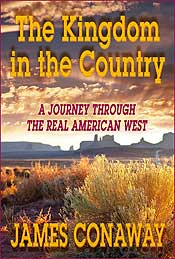
Read it all at: http://www.amazon.com/The-Kingdom-Country-Journey-American/dp/098972557X/ref=as_sl_pc_tf_til?tag=fearlessbooks-20&linkCode=w00&linkId=&creativeASIN=098972557X
                                                    *
For a broader look at the public lands confiscation movement in the west read this from the NY Times:
http://www.nytimes.com/2016/01/11/us/the-larger-but-quieter-than-bundy-push-to-take-over-federal-land.html?rref=collection%2Fsectioncollection%2Fus&action=click&contentCollection=us&region=rank&module=package&version=highlights&contentPlacement=1&pgtype=sectionfront

Saturday, January 9, 2016

You can lead a cowboy hat to history, but...

Why is there no Homeland Security in eastern Oregon? Because the feds are buffaloed. They should promptly restore peace and productivity to the Malheur Wildlife Refuge, and start teaching American history 101 to occupiers - in jail.                                                     

The following's an abridged account of the ownership of western lands from The Kingdom in the Country. The setting's New Mexico but could be most anywhere in the intermountain West:                                                                       


      I went to bed in their spare room and propped the pillows up against the whitewashed wall. Stuffed animals sat in old milk crates, waiting for the owners' grandchildren. Beyond the window I could see hills flushed with the yellow light of a westward-trending moon and the dark crease of the draw which ran through the ranch, dry now. I thought of the Anglos who settled here in the early nineteenth century; they had contended with the Spanish for what they considered theirs. In 1845 a magazine editor named John L. Sullivan excoriated foreign countries for "limiting our greatness and checking the fulfillment of our manifest destiny to overspread the continent allotted by Providence for the free development of our yearly multiplying millions."
Those multiplying millions were at first reluctant to die at the hands of savages, or to starve in country rough beyond their imagining; they had to be oratorically prodded out of Eastern cities. By the time of the Civil War most land in the West not too rough or dry to be plowed had come into private ownership, much of it through fraud. The Homestead Act at the end of a string of uncommonly wet years moved nesters into places normally unfit for farming or other human sustenance. Boosters like William Gilpin, the territorial governor of Colorado, proclaimed that moisture followed the plow and that firewood lay under the sand and that, in short, agrarian culture could modify the West's aridity and transform the landscape. It was a cruelly deceptive claim.
Tenacious dirt plowers and their suppliers, including disgruntled Southerners fleeing the aftermath of the Civil War, settled by the dozens along the Macho, where no families live today. Three derelict schoolhouses are testimony to the homesteaders' optimism. Eighteen inches of annual rain at the end of the last century had meant flowing streams year round, and flourishing grain; but that precipitation proved to be a fluke, and widespread disaster followed in the drier years. The owner of this house had himself been raised in one of the settlers' dugouts, a one-room house with a dirt floor, but he belonged to a very different tradition, that of the stockman, fencer of the range. His stepfather had bought up a number of homesteads early in the century, after extended drought ended the squatters' dreams.
John Wesley Powell, the first runner of the Colorado River and visionary of the settled arid West, advocated more land for homesteaders, to be sold or given to them according to the amount of available water. Where water was scarce, more land would help overcome the shortage of moisture and so of crops. But Congress stuck with its policy; too little land for homesteads created cemeteries in country where individual families could not make a living on a quarter-section or a half-section or even a whole section. Before the end of the century, cattle and sheep had come to dominate the West.
In 1890 the U.S. Bureau of the Census announced that for the first time it had been unable to discover a clear boundary between wild and settled areas. Officially, there was no longer a frontier. But the West as a state of mind remained important to Americans, whether or not they intended to go there. "American social development has been continually beginning over again on the frontier," Frederick Jackson Turner said in 1893, in a speech before the American Historical Association that left a lasting impression. Free land, he said, had made our unique democracy possible. "This perennial rebirth, this fluidity of American life, this expansion westward with its new opportunities . . furnish the forces dominating American character."
The evolution of public lands could be seen from the window of this spare room. The homesteads had clung to the river, where low meadows received water at least some of the year. They could be plowed, and wells dug, and a house built like this one, within sight if not the shade of cottonwoods. The higher country, away from water — the land nobody wanted — touched and mingled with the private holdings, but its ownership had been ignored or taken for granted.
No one wanted to buy this land when it was for sale. It had been free for the use up until the passage of the Taylor Grazing Act. Now the government leased it for far less than the cost of grazing rights on similar private land, but ranchers had always considered the public land theirs.
They still do.                                                                         
To order go to: http://www.amazon.com/The-Kingdom-Country-Journey-American/dp/098972557X/ref=as_sl_pc_tf_til?tag=fearlessbooks-20&linkCode=w00&linkId=&creativeASIN=098972557X

Thursday, January 7, 2016

The difference between men and hats (and hoodies)

Lots of response to posts about the occupation of the Malheur National Wildlife Refuge in eastern Oregon. The occupiers spend time watching Fox News as they wage ideological war against "the government," reason, and birds.


To read about real cowboys go to:
http://cjonwine.blogspot.com/2014/05/lighting-out-for-territories-6-latino.htm
                                                                                

Wednesday, January 6, 2016

Every cowboy hat should try to read this

The ruckus in eastern Oregon arises from ignorance and greed, not history. Ranchers and others have enjoyed the privilege of using everyone's land since the Louisiana Purchase. Here's the introduction to my book about public lands in the West, written soon after I fled the Washington Post:  


Vamos . . .
I first heard about the West — the West as experience — from my grandmother. In 1900, when she was thirteen, she traveled from Arkansas to California in a covered wagon. Her mother had tuberculosis, and the doctor had prescribed a slow transition from humidity to drier climes. At night the girl slept under the wagon, and during the day she shot jack rabbits from the hard plank seat. Her father had taught her to use a rifle and once convinced her to shoot a cigar out of his mouth in an audacious display of marksmanship, or so she claimed.
My parents took the same route, to Tucson, in the early thirties, from Memphis, their Chevy convertible packed with everything they owned. They had just married and were avoiding hometown rules and expectations. The West was dry and distant, and imbued with exotic promise. They rented a stone house in the Sonoran Desert, and for a season my father chased cows for a rancher while my mother filled up canvas with paintings of ocotillo and red rock. They returned home two years later, to the prospect of children, a world war, and endless responsibility. But the photographs of them in the West show an unencumbered man and woman, touched with radiance, standing amidst the spectacular geologic rubble of high, arid ranges.
My father's spurs became the legacy of a man interested in escape, not horses. They hung on our wall in Memphis as life went on, the big Mexican rowels rusting, the hand-tooled leather going to dust. Memphis in the fifties claimed to have more churches than gas stations, and I grew up yearning for a glimpse of all that land beyond the Mississippi, and the freedom it implied. Memphis had served as a jumping-off point for westward migration a hundred years before, as important in its way as St. Louis. Travelers who were not "GTT" — Gone to Texas — angled up through Fort Smith, Arkansas, and then headed southwestward to their real or imagined destinies. Walter Prescott Webb compared the South and the West in The Great Plains. Both, he said, were exploited by the more powerful Northeast, both "tributary to the masters of the Industrial Revolution. Both kingdoms produced what promised to be a distinctive civilization, a thing apart in American life."
I finally got that glimpse of the West while in college. I worked one summer as a hotel desk clerk in Central City, Colorado, and another summer harvesting peas in Washington State. I rode the Greyhound across miles of apparent emptiness between home and what amounted to another country. I often told myself that someday I would really get to know the West.
In the early 1980s I lived in Washington, D.C., about as far from those open spaces as I could get and still be in the republic. I worked for the Washington Post, writing profiles of various characters who washed up on the shores of Ronald Reagan's Potomac. They were an intriguing lot — the White House chief of staff, the director of Central Intelligence, the secretary of defense, the ambassador to the United Nations — all housed in buildings much like the Post's , with security guards and windows that didn't open. I also performed, for the Style section, what were referred to as "day hits" — shorter pieces about prominent visitors as various as the Dalai Lama and a rising actress who had tied up Jerry Lewis in a film about urban obsessions.
One day, at the office of the secretary of the interior, in a gray edifice seemingly built to confirm every prejudice about federal architecture, I met James Watt, the secretary of the interior. Watt viewed the American West as an economic opportunity and an ideological battleground. His contentiousness and political zeal made him popular among developers and unpopular with conservationists. He had become the most controversial of all the interior secretaries, including Harold Ickes, who had used his friendship with Franklin Roosevelt to transform the department into a real power base. Ickes had a bedroom at Interior because he spent so much time there. He reportedly used it for his liaisons as well as for sleeping. He suffered a heart attack in 1937 and insisted upon recuperating there. Watt had the bedroom transformed into his executive suite, and used the expansive westward-facing office — the most impressive in town — only for ceremony.
I eventually found myself sitting with Watt in his limousine, in the basement of lnterior, while the secretary denounced environmentalists and the Eastern press as tacit conspirators in an attempt to overthrow the democracy. He seemed oddly vulnerable, with his Coke-bottle glasses, high domed forehead, and ideological fervor. "The battle's not over the environment," he said. "They want to change our form of government."
It was a preposterous view, but unequivocally held and unequivocally stated — a rarity in Washington. Watt was dismantling Interior's influence, and some of its prime country as well, in the name of God and progress. But the controversy wasn't what interested me. I couldn't forget the epiphany I had experienced when I first walked into Secretary Watt's outer office, or the sense of possibility it entailed. In the deep russet carpet, the wood paneling, and the portraits of former secretaries lay the intimation of distant peaks, desert rock, and riverine lands. Congress and the Supreme Court had the law, the Pentagon had the power of destruction, but Interior had real estate — millions of prime acres in the West.
Later, I spread a map of America's public lands on my living room floor. Great gold-colored swaths represented Interior's land, most of it the responsibility of the Bureau of Land Management; green represented land administered by the U.S. Forest Service, the sister agency within the Department of Agriculture. Green and gold overlay much of the states between the Rockies and the Pacific — a federal domain of staggering immensity.
The two agencies — the Bureau of Land Management and the Forest Service — can be seen as a monolith. Both grew out of the old General Land Office, which was set up to deal with the remnants of western expansion. The BLM and the Forest Service control close to half of the intermountain West, a domain almost as large as western Europe, but relatively unpopulated. Surveying my map, it occurred to me that a person could travel this federal kingdom from the Mexican border to Canada and seldom leave it, and never lose sight of it. 
Over the months I returned on my own behalf to the gray buildings of lnterior and Agriculture to talk to BLM and Forest Service career officers and resource specialists. Many of them seemed out of place in Washington with their wide ties and sideburns, talking in accents from the far side of the Mississippi, and trying to manage more than 300 million acres in the Lower Forty-eight. Their kingdom, spread with some of the most beautiful and terrifying terrain on Earth, seems endless; but for many people it has little meaning. To most Easterners, for instance, public lands are parks — which actually represent just a tiny fraction of the whole — or worthless pieces of desolation left over from an age of scalps flapping on lodge poles.
Meanwhile, like a lot of other males in their forties, I was developing physical abilities beyond those required for a merely urban existence. Weightlifting was an unacknowledged preparation for a fantasy beginning to take shape. I ran daily in Rock Creek Park, a fugitive in shoes designed for the briefly unencumbered, and reflective garb more appropriate on an astronaut. The park cuts through the city like a verdant wedge and offers in its approximation of wildness one of the boons of Washington life. On otherwise deserted trails, far from quarrelsome traffic, I could envision bigger country where less rain fell; in miniature chasms I saw the origins of a grander, broader landscape.
I began to collect maps as a lifer collects law manuals. They provided detail about the national forests in the West and about remote areas run by the BLM, forlorn and therefore alluring, where roads and towns are pathetically overwhelmed by the country.
I decided to head west, without a salary or the need for day hits, and took a year's leave of absence from Style, knowing I wouldn't return. I told myself that I was obeying the same impulse that had drawn people out of fields and factories a century before; I had to admit that an adolescent urge had become a middle-aged preoccupation. Giving way to it was chancy and painful but irresistible. I said goodbye to my wife and children, knowing I wouldn't see them for months, and left in a van packed to the windowsills with camping gear, books, a typewriter, and oil company credit cards.
Every day travelers in station wagons and five-axle semis look out their windows at the West and think that all that alternately inspiring and godawful stuff belongs to the descendant of some titled lord or to some son of a bitch too tough or too dumb to up and leave. Most of us travel it for days without knowing that it belongs to us. People living there lease parts of the West and turn their animals or their clients loose on it. They dig holes in it, dynamite it, mine it, cut timber from it, steal parts of it to build their patios, grow dope on it, hunt on it, drive machines of fantastic aspect across it, get drunk on it, make love and sleep on it.


I left Washington to look at federal real estate. What I discovered was people — repositories of a national myth. Cowboys, Indians, gold miners, mountain men, and hustlers you might expect; but I also found some I couldn't have foreseen: a gunfighter holding sway over a remote part of Wyoming at the end of the twentieth century, for instance, and men still taking multiple wives in the shadow of flaming sandstone cliffs. I found defenders of a mythic place, abusers of the same, some ordinary and many extraordinary men and women. Where they fit in the larger scheme did not become clear to me until much later, after the bits of experience had been scattered. In the pages that follow, these people appear, not according to my itinerary, but in deference to their purposes in the land that supposedly belongs to no one.
                                                      *
      For a succinct summary of the unforeseen consequences of Manifest Destiny, read today's piece in the New York Timeshttp://www.nytimes.com/2016/01/06/upshot/why-the-government-owns-so-much-land-in-the-west.html?rref=collection%2Fsectioncollection%2Fus&action=click&contentCollection=us&region=rank&module=package&version=highlights&contentPlacement=6&pgtype=sectionfront&_r=0
     To read more excerpts from Kingdom go to the drop-down menu, right, and start with April, 2014:
                                                                             

Monday, January 4, 2016

Idiots occupy a wildlife refuge

... to protest the fact that public lands belong to all Americans, not just to them.


     The stand-off that wasn't in eastern Oregon reminds us that terrorism is in the eye of the beholder. If environmentalists had done this to highlight, say, lack of protection for wolves in the northern plains, they would be compared to jihadists. But if beef producers and assorted Tea Party malcontents do it they're... well, what exactly are they since the land isn't theirs, nor are the responsibilities of administering it?
     For more on this issue go to The Kingdom in the Country, my travelogue about public lands in the inter-mountain west, with excerpts starting in April 2014, at right in the drop-down menu.
     And don't miss Edward Abbey, who was passionate about this subject: http://cjonwine.blogspot.com/2014/01/edward-abbey-rip.html
                             (Next: Don Corleone's Desk: 2)
                                                       *


To order The Kingdom in the Country from Amazon,  go to:
http://www.amazon.com/The-Kingdom-Country-Journey-American/dp/098972557X/ref=as_sl_pc_tf_til?tag=fearlessbooks-20&linkCode=w00&linkId=&creativeASIN=098972557X

Wednesday, December 30, 2015

Don Corleone's desk: 1

My second book about the valley, The Far Side of Eden, was published in 2002. What follows is a series taken from it that helps explain some of the issues and personalities that still bear heavily on the present. Earlier postings can be found in the menu to the right, starting in June 2015. 
                                                                             
      A bulldozer operator cutting a foundation for a mansion overlooking the valley floor or clearing chaparral for a vineyard still came across the odd redwood stake, hammered into the earth in another era. And if the driver knew the valley, he might say, “Ah, the Italians.”
      Their names are mostly forgotten, as are the men and women who put minds and backs into what became a triumph of transplantation. They were once as exotic as the Chinese coolies they replaced in the fields, identified by hard cheese, stubby smoldering toscanos, and unpronounceable names. The Italians took up the tough tasks and seemed to enjoy them, their warm, explosive speech echoing through the vineyards and their smiles in the old photographs full of teeth. They paid homage to grapes few people had heard of and no one dreamed would someday have a devoted following here as “Cal-Italos” and “super-Tuscans.” The names suggested foreign potentates, saints, and weather—barbera, sangiovese, nebbiolo. They drank local “zin” (zinfandel) and “pets” (petite sirah) with gusto, in great quantities.
     Their cooking varied beyond the imaginings of the Californians—how could there be so many different kinds of noodles? And they were loyal. Take on one Italian, take on all. Unfazed by the stupendous effort required to plant and tend grapes by hand, they had unbounded confidence in other endeavors, insisting on their due, maintaining bella figura, gradually buying up plots in the Central Valley and in the narrow coastal defiles, farming land no one else wanted, including the hillsides. The already wealthy owners of those Victorian piles built in the late nineteenth century in Napa and Sonoma couldn’t outlast the paisans, whose favorite game involved bowling without pins and who pursued life on a level of emotional intensity exhausting to the uninitiated.
     There was nothing that could not be contended. “An argument,” as one descendant recognized, “is an Italian conversation.”
     Mostly they worked. It was as if the Protestant ethic had been grafted onto the Catholic mysteries. The outcome of all this energy was not limited to wine, food, and opera. There were Italians in the bank in San Francisco, and so a large segment of the wine industry was nurtured. Italian fortunes came to be exemplified by two names famous in the California vineyard, Gallo and Mondavi. Ernest Gallo showed California how to sell wine with a single-minded competitiveness that left the competition dry-mouthed. Eventually he turned bottles with handles on them into sleek Bordelais shapes containing French varietals and sold them at prices no one ever thought Gallo wines would aspire to. But more than anyone in Napa Valley, it was Robert Mondavi who boosted the appreciation of fine California wine.
     The Mondavis had been preceded in the valley by Louis Martini, an imposing figure in a black cloak, a gifted winemaker but proud, terminally argumentative, thoroughly Italian. Had Martini possessed a talent for public relations, there would never have been the Robert Mondavi phenomenon. Robert and his brother, Peter, began in Sunny St. Helena Winery with their father’s money, Robert dreaming of oak barrels and a product to compete with the best, which then meant French. But his and Peter’s arrangement—an echo of the Gallo brothers’ anthem, “I’ll sell all the wine you can make if you’ll make all the wine I can sell”—faltered after too many Italian conversations, and Robert went out on his own.
     So relentless was his selling and so great was his success that he attracted a Frenchman—the Baron Rothschild—to Napa Valley in the 1970s, a coup and a watershed. But now, at the end of the twentieth century, the Robert Mondavi Winery was a publicly held corporation where Italian conversations abounded between Robert’s two sons, the lucky spermers Michael and Tim, with their sister a distant moderating force. What would happen to the corporation when the old man died was anybody’s guess.
     The most famous Italian in the valley might still be Robert, but increasingly attention focused on another name, one with fame related not to wine but to the spinning of celluloid fantasy and, increasingly, to tourism.

     “Don Corleone’s desk will be in the entrance hall,” said the handsome young woman serving as a tour guide, talking about the desk used in the film The Godfather. “It’s a statement, you know, of Francis’s accomplishments.”

                                             (Continued)
                                                      *                                             


 To order Napa:

Thursday, December 24, 2015

The revelatory power of a row of trees

My second book about the valley, The Far Side of Eden, was published in 2002. What follows is a series taken from it that helps explain some of the issues and personalities that still bear heavily on the present. Earlier postings can be found in the menu to the right, starting in June 2015. 


  One day Roland Wentzel saw a bearded man in glasses and blue jeans drive up in a car and get out. He was smiling, as Wentzel remembered it. “He said, ‘Hi, I’m your new neighbor.’ Then he told me how rich he was and that he was going to sue me.”


     Bob Bressler would dispute that account. “I didn’t get in my car and drive over there,” he said. ”I was coming home from somewhere and saw him, and simply stopped.” He would deny threatening to sue because ”that would have been illogical.”

     A subsequent survey proved that the Bresslers did indeed own the allée. They granted the Wentzels an easement to use it anyway, and decided to cut down one row of trees, acting on the advice of Dave Abreu, the vineyard manager, whose sole interest was vines. The Bresslers had learned that grapes, not trees, were what Napa Valley was all about, that if you wanted to be taken seriously, you had to be willing to go to the mat over quality cabernet sauvignon. The trees not only took up space but would also shade the young vines, and they were, as Bressler pointed out, “only poplars, for God’s sake.”
     The truth was that neither Bressler nor Wentzel stood to lose anything substantial. Failure to produce a sought-after, expensive wine would not appreciably affect Bressler’s fortune, nor was Wentzel financially prohibited from tearing down his little guesthouse and building a petite allée on his own property. And whoever failed to get what he wanted could well afford to move somewhere else and start over again.
      What really transpired was a contest of wills among people accustomed to getting what they wanted: vineyard owner, vineyard manager, and neighbor were all convinced of the rightness of their position and unwilling to compromise. The argument was not about grapevines, profit, peri-urban aesthetics, or the need for yet another cult cabernet, but about the importance of winning, and a direct reflection of corporate values projected on a small, increasingly fragile part of America.
     Some perspective on this was provided by Samson Bowers, a tall, courtly, aging St. Helena city councilman—white goatee, white buzzcut, tennis shorts—who lived for a time in the Wentzels’ guest cottage, liked the poplars, and after learning that the Bresslers intended to remove one row of them, decided to help out. Not officially but artistically, by making a scale drawing of the petite allée and plotting the angle of afternoon sun and proving that cutting the trees would do away with only about eight feet of shadow for a short period each day.
     Bowers had bailed out of advertising in Manhattan at age forty-seven and come west, never regretting it, living first in Carmel Valley and fleeing its commercialization, already the second time he had witnessed such a phenomenon. He grew up in upstate New York, and on the wall of his St. Helena condo hung a photograph of his ancestral home, a brick Georgian with a fireplace in every room, Bowers being descended from the man who had been given a patent for thirteen thousand acres by King George III in the eighteenth century.
     That land came to include Cooperstown, and Bowers had watched it transformed from a lovely American community into a parody of the same—Baseball, USA—with a Hall of Fame, “museums,” souvenir shops, baseball paraphernalia emporiums, and fast-food outlets. He didn’t want the same thing to happen to St. Helena, threatened by sheer wealth and by people pressing in from all sides. Newcomers to the valley didn’t vote, as Bowers often pointed out, and didn’t attend Rotary or the other less glamorous gatherings. “They want all the services they had in cities,” from specialty protein to “Julieted” nails. “And they always drive their cars.”
     Bowers walked everywhere—the supermarket, the library—and increasingly found himself opposed not just to automobiles but also to the concept of private property, a surprising position, he realized, in one whose ancestor was given land by the king of England. St. Helena had six thousand citizens, three traffic lights, and no Mc-Donald’s. The closest thing to a fast-food stop was Taylor’s Refresher, home of the ahi burger, heavenly fish tacos, and of course wine. “The only way to keep the town small is to deny the overblown plans of outsiders, commercial and otherwise,” Bowers said repeatedly. “But ‘no’ is a word Americans have a problem with.”
     The “yuppiefication of the valley,” as he put it, was symbolized by the Napa Valley Wine Auction, which raised large sums of money from people competing to show how much of it they had, and by the fact that few of the almost three hundred vintners “ever get their hands dirty.” Both things he saw as the unhealthy result of a national economy empowering a relative few without inculcating in them a commensurate sense of responsibility.
     Bowers calculated at the time that the Bresslers’ new vineyard would contain twenty-eight hundred vines per acre when completed. That was six times the number that would have gone in under the old planting system, before yield and quality became as much social as financial concerns. Each of the vines would require water, and water was already a contentious issue in the valley. All an ob server had to do was to project the elements in this little conflict over a row of poplars onto the rest of the valley to see the scope of the problem of vineyard development. In the end, Bowers believed, the big battles—including the one over the hillsides—would be between private property proponents and those advocating shared community values.
                                                                                
     The trees were cut, Roland Wentzel contending that about thirty poplars fell to make way for roughly as many cabernet vines, but Bob Bressler claiming that only twenty-four fell, and this allowed him to put in four additional rows of vines because he no longer needed turnaround space for the tractor. The capitalist also claimed that the additional vines would produce at least three hundred bottles of wine worth, if all went well, about twenty-five thousand additional dollars a year.
     The Wentzels continued to look at the toy vineyard and at the Bresslers’ house and tried to be philosophical about both. But then they put their lovely Mediterranean villa, with its monastery beams and old-fashioned, wide-spaced vineyard, on the market for five million dollars. They moved up to Mendocino County—no one asked if they still intended to turn back the clock—to relatively unspoiled country. There they, too, put in a commercial vineyard, and planned to build a winery.


To order Napa:

Saturday, December 19, 2015

As he often said, "I'm a capitalist."

My second book about the valley, The Far Side of Eden, was published in 2002. What follows is a series taken from it that helps explain some of the issues and personalities that still bear heavily on the present. Earlier postings can be found in the menu to the right, starting in June 2015.                  
                                                                             

 The Bresslers' property already included a little acre-and-a-quarter vineyard planted to runty vines in a long-gone, less sophisticated time, and this might have satisfied them, being the down-to-earth millionaires they were, in jeans and baggy sweaters, with a pool table in their living room and a droll sculpture of a standing lower torso, also wearing jeans. But then they met the vineyard manager, and everything changed.                                                                               
     Vineyard managers are necessary adjuncts of the good life in Napa Valley, more important than personal trainers or personal chefs, and in the valley they come neither easily nor cheaply. This one had a crooked smile, a tendency to swear, and a reputation for excellence at any cost which, translated, meant anywhere from twenty-five thousand to seventy-five thousand dollars to replant a single acre of vines, and another ten thousand to thirty thousand dollars an acre a year just to maintain it.
     This vineyard manager was an outgoing native with curly black hair and a lopsided grin named David Abreu, of Portuguese descent, who had grown up in the valley and learned vineyard work the hard way, by doing it. Abreu was the most talked about vineyard manager in the valley now, which some thought meant in California, some in the world, a “vineyard manager to the stars” sought after by the likes of Garen Staglin and others who could afford him.
    Abreu came over and looked at their vineyard and laughed in that slightly manic way of his. He said, “Here . . . hey,” and began to pleasantly curse, calling theirs “a toy vineyard.” The Bresslers had to hire a winemaker, too, for between one thousand and four thousand dollars a month, and not just any winemaker. Mia Klein, partner of Tony Soter, architect of the famous Spottswoode wines, had for years made the cult cabernet Dalla Valle, and she and Dave and the Bresslers had a fine debate about rootstock. Dave agreed to a close planting, three feet by five, for a mere six thousand dollars, and Mia to someday make the wine in one of the valley’s custom crushers—commercial wineries offering pressing and storage facilities to small producers—for forty dollars a case. The Bresslers would have to buy their own French oak barrels for storage at six hundred and fifty dollars apiece.
     What fun, the Bresslers thought. Even with a toy vineyard, where the economies of scale were not in your favor, more money could be made than was spent, given the astronomical price of Napa Valley boutique cabernet sauvignon with the right provenance, meaning it had been put together by the right people and carefully positioned. Hadn’t the Grace family turned one acre of grapes into a cult wine of the nineties? The Bresslers would hire someone to do their label, the twenty-first-century equivalent of a coat of arms; such a “package,” including foils and letterhead, could cost more than one hundred thousand dollars to design. But first they went label shopping at Dean & DeLuca, picking out the sort of label they liked, imagining what their name would look like on a lovely dark bottle.
     Gradually the vineyard became more to them than a toy. They were able to buy an adjoining four acres, and quickly did so, and Dave Abreu took that on, too. By then the price of it all had risen considerably. Abreu now said, when asked how much money would be required, “Whatever it takes.” The Bresslers could afford him and they could afford Mia Kline. Bob Bressler was, as he often said, modestly, standing there in his running shoes, clean jeans, and bulky sweater, cell phone attached to his belt, “a capitalist.”
     He and Stacy would eventually produce a thousand cases a year. Robert Parker, the famous wine critic, would no doubt taste their wine because he liked Abreu and he tasted all the wines originating in Abreu vineyards, and all the wines that Mia made, and usually ranked them highly. The Bresslers’ wine would flow out to the world through fine restaurants and the Internet when the time came. All this was predicted from what was still a scruffy patch of hobby vines but might someday be a cameo Lafite or Stag’s Leap.
     In the process something else was being demonstrated by these avowed capitalists: making money had become a necessary component of social and cultural authentication; it was perhaps the primary distinction between the new fortunes of the day and those of the past, as if John D. Rockefeller had tried to marginally increase his fortune with some commercial enterprise in his side yard.
     Meanwhile, at parties, people inquired after the Bresslers’ vineyard and after their intentions for their wine; suddenly, Bob and Stacy were in. Their involvement in a vineyard and a cabernet aspiring to cult status was an indication of serious intent and the great distance they had traveled in a short time—from the rigors of take-no-prisoners electronic innovation to the joys of vintnerhood.
                                                   *
     Some of their new neighbors had reservations about all this. The neighbor just to the west, Roland Wentzel, was a successful entrepreneur, not in computers but in furniture, the owner of three upscale outlets called Traditions who had come to the valley in 1990 to “turn back the clock.” He had conducted a survey of the Bay Area and concluded that St. Helena was the only small town left with a small town’s characteristics. These included an independent economy, so people did not have to get into their cars to go shopping, and schools close enough so children could walk, and the movie theater and restaurants close enough for the parents to do the same. And there was agriculture within the town limits.
     Farming was a vital part of the ideal community, Wentzel believed, and of nature, too, evident in the long westerly view of the Mayacamas Mountains that included Douglas fir and some redwoods, evidence of the rapidly disappearing wild California past. A soft-spoken Ph.D. with a degree in resource economics, he had earlier come under the tutelage of the agricultural economics theorist Siegfried Ciriacy-Wantrup, at the University of California, Berkeley, and in Paris had studied “peri-urban” agriculture—farming in the presence of an ever-expanding population.
     Napa Valley’s agriculture was increasingly peri-urban. Wentzel thought the county had done a pretty good job with maintaining it, largely because of long-standing zoning restrictions, and he wanted to be part of it, but not obtrusively. The idealized small-town environment he prized would not have been possible without vineyards like the old one that came with his property, and with the house next door. Grapevines had postponed subdivision and provided open space, as well as that connection to nature.
     Wentzel did not hire a vineyard manager to take care of his, and he didn’t tear out the old, unchic grape varieties but worked them himself, going against what he referred to as “the dilettante fashion of these times.” He and his wife, Barbara, built a lovely, pale orange Mediterranean house with lots of doors and beams from a monastery in Spain. In addition, they planted Lombardy poplar trees on the eastern boundary, to form a petite allée to define the dirt road there and contribute to the rural aesthetics. An allée was a traditional European walk or drive lined with evenly spaced trees—yews, hornbeams, or sycamores—but the Wentzels’ allée was defined by fast-growing poplars that would also screen what they considered a less than aesthetically pleasing house being built next door.
     The owner sold it unfinished to a developer, who made some cosmetic changes and put it up for sale again. The developer also informed the Wentzels that he, not the Wentzels, owned the dirt road and one side of the petite allée. That was a surprise to them, but such things were happening in Napa Valley. Re-surveys and lot-line adjustments were common now in a place where property boundaries had once been casual considerations, before real estate became synonymous with getting rich.
Roland Wentzel wrote a letter to the broker saying that he was under the impression that he owned the allée and assumed it would be preserved in any case.
     Then he had learned that the prospective buyer was a dot-comer named Bressler.
                                            (Continued)
                                                                                  *
                                                 

To see my bio, click on:
To order Napa:

Sunday, December 13, 2015

You could just swirl wine in a tulip-shaped glass and not talk in code

My second book about the valley, The Far Side of Eden, was published in 2002. What follows is a series taken from it that helps explain some of the issues and personalities that still bear heavily on the present. Earlier postings can be found in the menu to the right, starting in June 2015.                                                   
     THE SANTA CLARA VALLEY, at the south end of San Francisco Bay, had once been as beautiful as any in California, an agricultural idyll obliterated by its late-twentieth-century makeover. People up in Napa Valley were acutely aware of this and wondered aloud if their valley’s fate could be the same in the twenty-first. The question was more often answered in the affirmative now, as the two valleys came together in ways that said much about values at the high end of American achieving. One was the symbol of quick, unbounded wealth, the other of the good life that had come to entail, in addition to pleasure, cultural authentication. Simply being rich was no longer enough, and since these two geographical founts of money and legitimacy lay only sixty miles apart, it was inevitable that the newly monied denizens of the former would be drawn to the charms and social opportunities of the latter, and that there would be problems.
     All the traffic in Napa Valley could not be blamed on the northward migration from the other valley, not with five million tourists annually. But in spring “dot-commers” and related beneficiaries of the stock market were an outsized factor in valley life. They vacuumed up plants at the nurseries and construction material at the building-supply outfits and tended to be blamed for the muscle houses, angular frame slope-clingers, stucco mishmashes, and monumental stone boxes with driveways cut brutally into the earth. Many of these had been put up by developers, retailers, and various other trophy-house collectors, serial builders having become epidemic all across the nation. Some of those rich folk also owned getaways in Snowmass or the Hamptons, Provence, Tuscany, and elsewhere, and their decidedly immodest off-road vehicles, symbolic of their ability to go anywhere in safety and comfort, ascended on weekends like metallic insects on the vernal skin of a sleeping beast.
     Even in winter, when bluish smoke rose from the fires of vine cuttings, big, bright SUVs passed under volcanic rocks with deep striations, eyed by buzzards tilting overhead, lending the scene a medieval quality.
                                                 *
     Robert Bressler was in some ways representative of the dot-com wealth newly arrived in the valley, and in others highly individualistic. He considered himself lucky to have earlier been in the right place at the right time, by which he meant the Massachusetts Institute of Technology in 1971. There, writing a graduate thesis about how computers talk to each other, a budding electronic engineer before anyone had come up with the handle “computer scientist,” he got involved in a Department of Defense project called ARPANET, which for all practical purposes became the Internet.
     Bressler went on to join a technology company. He discovered that he had an aptitude for understanding where networking was going when it was about to go bonkers. He was then recruited by Sun Microsystems, a pubescent general in the happening electronic revolution, which made him a vice president. Bearded, bespectacled, precisely spoken, Bob Bressler began to think of himself as the Johnny Appleseed of networking, a partaker of shared visions for the future. The best way to succeed on the wild digital frontier, he realized, was for engineers to work together toward a common goal, with lots of elbow room. Put a stake in the ground way out there and let the engineers work toward it. One stake in the ground was “special purposes devices,” bits of hardware that performed specific functions and did not need a big mainframe.
     The analogy of profitable networking he liked to use was that of the toaster: better to have something that simply makes toast than a toaster oven that does a lot of other unnecessary things and is complicated and more expensive. “In the old days,” he says, “the computers arrived in trucks, and the software in envelopes.” As a result of his and others’ innovative thinking, “the computers began arriving in envelopes, and the software in trucks.”
     By then Bressler, as a vice president, was well endowed with Sun stock, which would split five times between 1994 and 2000, making a lot of things possible for Bob and his wife, Stacy, that had never seemed possible before. They were living in Los Altos Hills, minutes from a company that was challenging others in the neighborhood as well as the mighty Microsoft, up in Redmond, Washington. Internet supremacy was the grail, and the Bresslers’ lives were dominated by the feverish, driven ways of a valley nicknamed for a microchip component.
      Fabrication and miniaturization, it seemed, had been projected directly onto the human persona. Every bit of turf was fought over, from the latest software to mountain bikes. In restaurants, the Bresslers would look around to see who was seated near them, and talk in code so no secrets would be revealed. There were so many stakes in the distance, people were tripping each other up trying to reach them, but there was little felt human intercourse or bonding. People were either transients or out to steal your vision.
     The Bresslers took all this for granted until some friends invited them to attend a wine auction up in Napa Valley, and there they saw that things could be different. The auction was a sophisticated party where you could have fun—unusual, even unorthodox behavior in Silicon Valley. You didn’t have to stand around talking in code, just swirl cabernet in a tulip-shaped glass and meet nice people, and the next year the Bresslers returned.
     Then they made a decision many people of means make when overlooking comely vineyards seemingly untouched by the ambition and acrimony in the world: they called a realtor. They bought a modest house and started coming up on weekends. They found themselves thinking of Silicon Valley as a distant battlefield and of Napa as home, and decided to move up full time. He would commute to Silicon Valley a couple of times a week. Still wearing his Sun Microsystems hat, he thought he could in his spare time put Napa Valley on the Internet, helping people who were interested in selling wine electronically. And maybe they would explain wine to him.
     Before long, the Bresslers had sold their first house and bought another, not an architectural expression of geek hubris in the hills, but a big, utilitarian structure in the up-valley town of St. Helena. It met their standard that they had to be able to walk everywhere from it—to Tra Vigne and the Green Valley and other restaurants, to the renovated movie theater and Main Street Books and the Model Bakery. Their new friends had told them they would never find such a house that was suitable, these being people who for the most part were recent arrivals themselves and already had their vineyards and their labels and assumed the Bresslers, too, were looking for a modern-day castle keep with plenty of space for vines.
     The Bresslers ordered the construction of an insulated wine room, an early step in any renovation. It cost eighty thousand dollars and was capable of holding eight thousand bottles of the right stuff, meaning many of Napa’s most famous cabernets that few people could afford even if they could find them for sale, with either a historical pedigree—Heitz Martha’s Vineyard, Stag’s Leap Cask 23, Phelps Insignia, Dunn’s Howell Mountain, and so on—or, more impressive, cult status—Dalla Valle, Screaming Eagle, Grace, Bryant Family, and others elbowing their way up the critics’ statistical ladders. Then their eyes turned toward the land.
                                             (Continued)
                                                      *                                                               
To see my bio, click on:
To order Napa:


Monday, December 7, 2015

The lifestyle question 3

My second book about the valley, The Far Side of Eden, was published in 2002. What follows is a series taken from it that helps explain some of the issues and personalities that still bear heavily on the present. Earlier postings can be found in the menu to the right, starting in June 2015.                                                         
      The Staglins applied for another winery permit, and would eventually get it in the waning years of the nineties, by espousing the right cause: the American Center for Wine, Food and the Arts. It was the ultimate project of the aging Robert Mondavi, a symbol of the valley’s exalted success in part due to the association of wine and art, and an indication of the country’s fascination with luxury.
     Still the reigning monarch of the valley, Robert was no longer at the head of the famous winery bearing his name, now a public corporation run by his elder son, Michael, that lucky spermer. The Center, Robert’s passion, was to cost a great deal of money. Garen Staglin had agreed to provide one million dollars for it and to raise more money from the heads of other corporations. When complete, the Center would have a room in it named for the Staglins—the Tasting Bar, or perhaps the Gallery of the Senses. The Staglins were, they told people, “kindred spirits” with the Mondavis and also in love with food, wine, art, and music.
     Mondavi went to see Jack Cakebread and urged him not to oppose the Staglins’ winery. This was ironic, since Jack had served as a stalking horse for the Mondavis for years, taking up causes that the Mondavis believed in but didn’t want to be associated with—like standards for reserve wines, a cause dear to the Mondavis but anathema to Ernest Gallo and so politically difficult. Although Jack took his old friend Robert up to his house to show him how close a Staglin winery would be, and although Robert said, “You’ve got to protect yourself,” he didn’t offer to help.
      The Staglins’ ostensible promotion of their wine took them all over. After a week’s bicoastal sojourn—to Nantucket and to Seattle, where they discussed their wines and the Staglin “vision” with restaurant owners, proprietors of wine shops, and devotees of Bordeaux and Burgundy who recognized the appeal of the California alternative—they returned to stroll in their vineyard, the setting sun igniting the eastern mountains. They were in an expansive mood. “Our house has one of the highest recognition factors in the country,” Garen said, of the effects of The Parent Trap, the Staglin Family Vineyards Web site, and a short film about them shown repeatedly on a commercial airline, called Dream Living.
      "Our wine allows us to go anywhere in the world,” added Shari, reaching up to turn down the collar of her husband’s polo shirt. “It’s a connection with the earth.”
     Garen pulled some grapes from a cluster and handed one to her; together they “sampled the sugars.” Their winemaker arrived in a minivan with her son, fresh from soccer practice, and over the stone wall they palavered about when to pick, the winemaker trying hard to accommodate the Staglins’ “sense” of the optimum moment. Then Garen and Shari drove into Rutherford for dinner.
Outside La Toque, a red Ferrari worth a quarter of a million dollars, too fast to drive on Napa Valley’s roads, was parked as a statement of a customer’s wherewithal while he traveled the valley in a limo. Garen explained that he and Shari are investors in the restaurant: “We cash-flow this thing on sixty-five covers a day,” he said.
     After they were seated, Shari, in a silk blouse of palest mauve, smiled up at La Toque’s sommelier as he filled their glasses from a bottle of Staglin Family Vineyards chardonnay, a counterpoint to the sautéed figs with “lime and ginger and seared Muscovy foie gras. Later, Garen tasted the Staglin cabernet and found there “a cornucopia of flavors” that suited the medallions of rare lamb and local chevre, antiphons to the wine’s primal chant. He mused about the qualities of the Staglin vineyard, formerly the de Latours’, and the practice of “manageable agriculture that doesn’t require the attention of a major corporation.”
     With it, he could make money in a more relaxed manner, with only three full-time employees, no outside investors, and a mode of existence more copasetic than that of a run-of-the-mill CEO. He and Shari derived more satisfaction from this than from activities traditionally associated with wealth, he said, like polo ponies or yachts. “Building a brand is more fun than winning the Block Island sailing race.”
     “And it can also go on for centuries,” she said. “We’ve met vineyard-owning families in France and Italy that have been there for seven hundred years . . . Awe-inspiring.”
     “We’re doing the succession thing—our children are involved.”
     Garen passed a hand across the scene: well-dressed people eating expensive food, handing bottles of wine back and forth between tables like ducal celebrants, attended to by culinary acolytes on the very edge of America. “Wine is all about these things,” he said at last. “When you can say you have had dinner with Garen and Shari, and talked about The Parent Trap, you’ve had a whole reinforcing experience.”
     And then, “We’ve got a lot of lifestyle here.”
                                                 *
To see my bio, click on:
To order Napa: