Sunday, October 6, 2013

The Big Easy... NOT

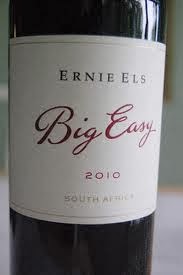
I have never tasted this wine, but that's not the point. It's not even the beginning of the story.

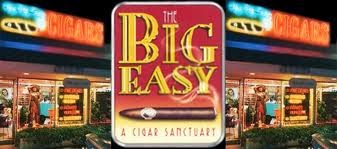
    And,  no, none of these are the cover of my first novel, The Big Easy (Houghton Mifflin), published way back in 1970, just a few of the innumerable rip-offs of my title:


                           And, no, I get no royalties from any of these:


       Stay tuned for the whole story when my - the only - novel,  The Big Easy appears as an ebook soon. 

Thursday, October 3, 2013

It's official, reading a good novel's good for you

According to Science magazine, literary fiction stimulates the mind
http://well.blogs.nytimes.com/2013/10/03/i-know-how-youre-feeling-i-read-chekhov/?ref=health&_r=0
(No word yet on the exact effect of fiction about NoCal's high-end wine culture on the imagination, but judging from the response to mine it has some.)


To order my novel, Nose, click on:  

Friday, September 27, 2013

Me, Bette Midler and Liam Neeson eat pig and other stories from the City of London...

   Walking is the best - the only - way to really see a city. Herewith an amble through one of the oldest in the western hemisphere that has particular resonance for me:
                                      

   GAZING up at the familiar dome of St. Paul's Cathedral, I saw the past - 300 years of British history wrapped up in one glorious edifice built by Sir Christopher Wren - but I also saw my own, very personal connection with London  I lived here in the late 1960s and early 70s, with the ever-present lyrics of the Beatles, the sight of long hair and outrageous fashion - remember Carnaby Street? - and the increasingly loud voices of the antiwar movement. Back then, the whole world seemed on the cusp of a new era, and it was ironic that I returned at another tumultuous time, when the global credit crisis was rocking the city.
     When we lived here, Penny and I had a flat in the West End, on the other side of town from St. Paul's, which now sits among flash new buildings. Kensington Gardens, Notting Hill Gate, and Earl's Court were our 'hoods; our oldest daughter, Jess, was born within sight of Buckingham Palace, but we lived in a realm of expats, artists, hip Brits, and a few old-line families. The financial district was, with the exception of St. Paul's, a mystery to a writer more interested in the pubs of Chelsea and Camden Hill than byways of deal-making.
      I returned looking forward to exploring what I earlier neglected - the narrow, winding streets of the town's oldest district. Walking was a joy when I lived in London and it still is, especially in The City - aka the Square Mile - where famous Threadneedle, Queen Victoria, and Lombard Streets throb with a riot of cabs, cars, and buses dodged by waves of hurrying figures.
      "Here's where it all began," said Peter Wynne Rees, a big Welshman who showed me around. "This was the first human occupation, thousands of years ago. The Celts camped on what were the banks of Walbrook Stream, and now we've got this."
      Behind us was the Royal Exchange, a glittery shopping mall where Cartier, Chanel, and Bulgari had replaced brokerage firms. The Bank of England - the ponderous Old Lady of Threadneedle Street - sat on our right. Mansion House, residence of the Lord Mayor of London, was on the left, and all around the new towers of international finance. Far ahead, beyond all the construction, sat the pale, peeping, blue-gray dome of St. Paul's.
      The City of London was later settled by Romans and has for at least four centuries been the beating heart of England's financial empire. Today engulfed by sprawl, The City's western perimeter is marked by Fleet Street and Temple Bar, beyond which lie the West End and Westminster, and bordered on the south by the River Thames. The eastern boundary is Spitalfields and the Tower of London, the northern boundary Smithfield and Clerkenwell. But The City differs markedly from all these neighborhoods by virtue of its wealth and stylistically daring new buildings.
       I already saw that money was only part of The City's multilayered story. Here also was an astonishing concentration of iconic historic buildings. Hidden in alleyways and covered passages are taverns and shops going back to the time of Chaucer and mentioned in the subsequent works of many renowned British writers. On streets broad and narrow stand various legends in stone, often next to rising new structures.
      In a hurry - unless reading a newspaper in a vest-pocket park at noon, or cradling a pint outside a pub in the angled light of quitting time - are people, many of them young, who work and court here even when they live elsewhere, lending The City an air of youthfulness at odds with its age, and an energy unsuited to its reputation as the stolid soul of British conservatism.
      "Everybody here came from somewhere else," Rees said. "We're truly a city of immigrants, with 300 languages spoken. Young people all over the world are dying to come here, and do you know why? It's one big party. They happen to be at the height of their sexual and intellectual abilities, and we get the benefit of the latter because of their interest in the former."
      Rees was the planning officer for The City of London, run from offices adjacent to the ornate Guildhall nearby, and had about $650 million in annual income and its own police force. Rees, with occasional advice from English Heritage, a quasi-governmental agency, decided if and how the new buildings here got built. He admittedly had "a low threshold of boredom, so it's in the architects' interests to make their proposals attractive."

       Preserved open space is important to most Londoners, for whom green grass and sightlines to places like St. Paul's are sacred. But so are the byways that can only be explored on foot. Rees led me up Lombard, the historic thoroughfare of Lloyd's, Barclays, and other banks. "The whole thing started, you know, in the Black Spread Eagle pub in 1690. That's why some banks' logos still look like pub signs. So many people began trading at that time that they had to build a stock exchange to hold them all."
      Outside the Jamaica Wine House, men and women were having noontime drinks. They could be in the West End in 1969, except that instead of bell-bottoms and paisley they were all wearing dark suits and ties. I overheard a pinstripe say to a vest with a watch fob: "Can't do gold- too expensive. Can't do bonds- too unpredictable."
      "This is where business has always been done," said Rees, "in alleyways outside pubs, by people standing around with pots of beer, talking. One reason The City works is that there are so many places like this to go to."
      As we parted, Rees suggested that I visit the top of Tower 42, The City's tallest building and home to Vertigo 42, a hangout for traders that has one of the best views of the financial district. It was so popular I had to make a reservation - just for a place to stand. Unfortunately my spot was behind a column. All I could see through the tall windows was a bit of Tower Bridge to the east, and to make matters worse, I was charged $35 for a glass of champagne.
                                                       
      I made my way up Cornhill Street to the Leadenhall Market, the labyrinthine open-air emporium designed in 1881 by Sir Horace Jones. It was built on what has been a market site since Roman times. Today, occupants of the old shops are mostly restaurants feeding workers spilling out of the looming towers roundabout, or purveyors of clothes, gifts, and spirits that are part of larger retail chains. "We sell more champagne than any of our other stores," said Diosa Podda, a clerk in Oddbins, a wine shop. "We get people pouring in here buying bubbly when the market rises, and we get them when it falls."
      Next door is A Booth, Ltd., florists, the oldest continual business in Leadenhall. Owner Terry Dawson told me how much he misses the old poultry and game bird shops. "The last to go were the fishmongers. They're gone because the financial houses no longer have their own chefs and butlers, who used to come down here every day to buy. Now everybody eats out"
     The passageways were full of people, many text-messaging or glued to their cell phones. But stop and ask for directions and they were invariably helpful, as agreeable as they were in a hurry. Traders taking a pint outside the Lamb Tavern talked with colleagues while watching other suits go up and down the side of the Lloyd's building in mesmerizing glass elevators. When the international insurance giant built this headquarters in 1986 it was a sensation, with what look like stacks of gigantic silver cans and exposed pipes and ducts, a structure straight out of The Matrix.
      None of these new buildings existed when I lived in London, and they take some getting used to. When I asked a security guard about the Lloyd's phenomenon, he said confidentially, "Some like it, and some think it's bloody hideous." The City's most controversial new building was the 40-story 30 St Mary Axe. Designed by Foster & Partners, one of Britain's star architectural firms, it's known locally as the "Gherkin" (Londoners love their culinary nicknames), but to me it looked more like an upended black blimp encased in steel bands. Its double-skinned exterior is designed for maximum insulation, London's most environmentally sound skyscraper.                              
      Nestled between Lloyd's and 30 St Mary Axe is a modest little 16th-century church, St. Andrew Undershaft, a reference to the maypole that once stood out front. St. Andrew draws the eye away from the looming giants around it with its economy of scale and textural contrast of weathered stone. Part of the genius of The City's preeminence as one of the world's foremost financial centers has been the preservation of older buildings that soften the new and offer a historic complement. St. Andrew, like the more than 40 other churches here, two of them at least 1,000 years old, minimizes the discordant qualities of competing contemporary styles and reminds us of the aesthetics of an earlier age.
      Postman's Park provides an unexpected, grassy conduit to King Edward Street. I took Little Britain behind St. Bartholomew's Hospital until I found myself before the magnificence of the oldest extant parish church in England, St. Bartholomew the Great. Founded in 1123 as an Augustinian priory, it's intact, as is the little cemetery shaded by ancient trees and bordered by the Cloth Fair, a moribund fabric market. Inside the church, the dark timbered ceiling, massive stone arches, and clustered pillars support one of the two remaining Norman churches, redolent of incense and the mysteries of medieval faith.
      I was slightly nervous walking over the stone floor in the presence of the ghost of William Hogarth, the 18th century artist who was baptized in the preReformation fount. Gordon Furry, the verger at St. Bartholomew and a former Benedictine novitiate, told me the church was "one of the best-kept secrets in London. We have lots of weddings, and the annual service for the Worshipful Company of Butchers." Once a year the Worshipful Company of Butchers carries its flag past the Butcher's Hook & Cleaver pub and across St. Bartholomew's Square to the Smithfield Market, where fresh meat of all sorts - whole pigs, most manifestations of cow, venison, ox tails, ducks, grouse, partridge has been sold for the past eight centuries.
      I decided to try out some of those imaginative meat renditions at St. John Bar and Restaurant, a former smokehouse with long tables, just around the corner from the market. I sprang for roast bone marrow with parsley salad, ox tongue, and a fig tart with Jersey cream. I wasn't' the only one enjoying the spectacle of three roast suckling pigs marched out to groups of diners: Bette Midler sat with friends behind me, and on my way out I passed another actor, Liam Neeson, discussing his bill with a waiter.
      The butchers of Smithfield Market represent just one of London's liveries, organizations of tradesmen that over the centuries have become almost sacrosanct. On Upper Thames Street, I stopped to admire the Vintners' Company (see http://cjonwine.blogspot.com/2012/11/so-you-think-you-have-wine-club.html).                


                                              (Not my cover)      
      When I lived in London I was writing my first novel, The Big Easy, set in a place about as far from the City of London as one could get. The story's set in the seamier side of New Orleans. I was the first to use the name, which was later borrowed for the movie with Dennis Quaid et al (titles can't be copyrighted), but more about that later.
     For days I had been looking, from a distance, at the dome of St. Paul's. Now I was standing next to Wren's masterpiece, one of the world's most famous cathedrals. It shares Paternoster Square with postmodern office buildings, and the eastern horizon with the Gherkin. I joined a group exploring the vast interior, which was lit by light from Wren's celebrated dome. The ceiling of the long nave is an intricate curvilinear blend of gold and predominantly blue and green mosaic tiles; the towering stained glass behind the altar is richly illuminated. Here's a structure, I thought, that can compete with any new one, not in height, maybe, but in the moderating effect on the sights and sounds around it- a sort of architectural tranquilizer.
      A young priest was praying for those affected by turmoil in global finance, "particularly those here in The City." Visitors moved silently along the walls, wearing headphones; I took the staircase leading heavenward for an encompassing view of the unique urban experiment that is The City, climbing first to the gallery at the base of the dome, then up to the Stone Gallery. The crowd gave way to a determined few clinging to an iron spiral staircase. Taking the 528th step, I emerged onto the open-air Golden Gallery for a 360-degree view.
      The wind was blowing, but the rhythm of untold hydraulic tools was louder. A small army of proverbial ants labored far below in bright yellow vests and hard hats. I felt the full visual force of 30 St. Mary Axe and its competitors, and the dwindling of the romantic associations of the past. All those historic churches, pubs, mercantile exchanges, parks, and shops I had visited seemed to have been swallowed by the accumulation of the new, to accommodate numbers of people a Dr. Johnson or even a Dickens could not have imagined.
      But cities are best appreciated close-up, from the pavement, not from this nosebleed perspective. Down there, the past and present coexist admirably, I've found. The City's new architecture may be brilliant and imposing, but we also need those old buildings and open spaces, to ease the mind and make urban intensity tolerable. Without them, we can't begin to understand the present.
                                                                     
To order my novel, Nose, click on:  
To order my book of travel essays go to:

Sunday, September 22, 2013

Whiskey and the South

I was proof-reading the manuscript of my memoir, Memphis Afternoons, soon to be available as an e-book, when I came across the passage below. It's relevant to this blog but also to my past and, I think, the cultural power of alcohol that can transcend its immediate effects. (I will be excerpting more of the book later.)                        

     Much has been written about whiskey in the South. It was often talked about when I was growing up, and used at odd moments. Frank once heard our uncle, in the alcoholic blush of Christmas, cradling fifths of his two favorite bourbons, proclaim to all present, "These are the standards!" The idea was that good things followed if you knew what and how to drink, and kept in practice. Boys going off for the first time to Ole Miss or UT or Chapel Hill took with them an intimate knowledge of the mysteries of drink and were known for it. Dad traveled with a quart of sour mash and he kept one in the desk drawer at his office and another in the cabinet above the refrigerator. I often saw him extract and uncork a bottle on a tedious afternoon, an act that required neither apology nor explanation. The effect was palpably mellow, even to a boy looking on, a pleasant lengthening of Dad's self-imposed deadlines, a softening of the hot Memphis light.


To order my novel, Nose, click on:  
To order my book of travel essays go to:
   

Saturday, September 7, 2013

G'DAY FROM BURGUNDY DOWN-UNDER

   Few clouds in this bay...


  I love New Zealand: small, manageable, mountainous, trout-dense, agricultural, hospitable. I’ve just taken part in an extraordinary blind tasting here of 18 pinot noirs from four continents, and the good news for everybody (except maybe the Burgundians) is that New Zealand’s pinots surpassed most of the other wines and at least held their own with those of fabled Vougeot.
   If Lord of the Rings was real it would still take place  in New Zealand because no other place has so much natural enchantment. But the ring wraiths would be searching for grape clones instead the gold ring, and Frodo would be uncorking a 2010 vintage pinot noir and not sweating the small stuff.
   Americans should know that kiwi pinot noirs cost half as much, at most, as the French ones and are a lot more consistent. In short, you know what you’re getting with New Zealand pinot, a notoriously tricky varietal, and these are likely to be rich, nuanced, and lasting. The wines tasted were all 2010s. In continental order they were:
   New Zealand’s Black Estate, Waipara Valley, Canterbury; Cloudy Bay Vineyards, Wairau Valley, Marlboro; Cloudy Bay Vineyards Te Wahi, central Otago; Huia Vineyards, Marlboro; Kusuda Wines, Martinborough; and Two Paddocks’ First Paddock, central Otago.
   Argentina’s Bodega Chacra Trienta Y Dos, Patagonia (from vines planted in the 1932!).
   France’s (all Bourgogne) Chateau De La Tour, Clos Vougeot; Domaine De La Vougerai, Vougeot 1er Cru “Les Cras”; Domaine Drouhin-Laroze, Clos de Vougeot; Domaine Gerard Raphet, Clos de Vougeot; and Henri Boillot, Clos Vougeot.
Australia’s Ashton Hills Vineyard Reserve, Adelaide Hills: Bass Phillip Premium, Gippsland; and Freycinet Vineyard, Tasmania.

   Canada’s Foxtrot Wine, Foxtrot Vineyard, Okanagan Valley.

United States’s Cobb Wines, Diane Cobb Coastal Vineyards, Sonoma Coast CA; Thomas Winery, Dundee Hills, Willamette Valley OR.
This wasn’t a competitive tasting but inevitably comparisons were made - and delight discernible among the denizens of down-under viticulture, which is expected.
I was struck by the earthy power of the Cloudy Bay Vineyards’ Te Wahi, a new release (“deep color, closed nose but mouth-filling, with round dark fruit flavors and a long, savory finish. Big, moderated tannins”). It costs $75 a bottle, more than Cloudy Bay’s other excellent pinot but half the cost of, say, the Chateau de la Tour Clos Vougeot, also a wonderful wine with great aromatics and a similar bright finish.
Among the surprises in this tasting, the fifth such annual event held at Cloudy Bay Vineyards outside the town of Blenheim, were Kasuda ($50), with dark fruit flavor, a luscious, mouth-filling wine; Bass Phillip (only $18), bricky, complex, “silky”; Cobb ($115), bright with dark fruit flavors and a good finish; and Foxtrot ($70), a plummy offering from British Columbia built to last. 
The tasting concluded with a mere four-hour lunch over-looking Cloudy Bay Vineyards and a smidgin’ of New Zealand’s Alps, my table mates one of Cloudy Bay’s clearly talented winemakers, Nick Blampied-Lane, and a wine merchant who moves much high-end product among the growing cognoscenti of Hong Kong. Lobster, lamb, a crisp blood pudding, fermented garlic sauce, puree of spinach, all prepared by Des Harris of Cloony’s Restaurant in Aukland, who is a great rarity - a fine and also modest chef.
All those bottles mentioned above were left open for our continued perusal while a band played and the concerns of the world hung far out there beyond snow-dusted peaks and white lambs contentedly nibbling weeds among the patient vines.
              (Photo by Katie Kelly Bell) 
                                                                           

Friday, August 30, 2013

Just in from the Santa Rosa Press-Democrat...


It is forcast to be Clear at 11:00 PM PDT on August 30, 2013
Clear
90°/57°

7 Questions for James Conway

James Conaway, author of two Napa Valley tell-alls, has turned to wine fiction with "Nose." (Photo by Peter Menzel)
James Conaway, author of two Napa Valley tell-alls, has turned to wine fiction with “Nose.” (Photo by Peter Menzel)
By DOUG ERNST / Napa Valley Correspondent
James Conaway took on the politics and culture of the Napa Valley wine industry with his first two books, “Napa: The Story of an American Eden” (2002) and a sequel, “The Far Side of Eden” (2003). Now he has dipped his toe back into the pond with “Nose,” a novel that challenges the corporate culture of an unidentified but clearly recognizable Northern California Wine Country setting.
Conaway, 52, got into wine writing as a reporter for the Washington Post when the wine critic quit and he offered to take over. He divides his time between Washington, D.C., and Virginia’s wine country.
When you poke fun at the wine culture, are you warning folks not to take themselves too seriously?
It’s true, I do poke some fun at the culture in “Nose,” but I didn’t set out to do that. Most good novels come from some long experience, and that was true with this book. I was sitting in some good friends’ guesthouse in Napa one morning and suddenly had this vision of a very large, pompous British wine critic waking up under his wife. Odd, I know, but also hilarious. I kept going and wrote the whole first chapter, and only later did the more serious issues emerge.
I remember the first time I ever read a wine review and thought, “this language is preposterous.” Then I realized that much of it makes sense and is based in scientific fact. What doesn’t make sense is the pretension that’s often found in wine circles, most of it having to do with money and the very American notion that you can put on style and culture like a clean shirt.
That shirt is often a high-priced wine label that has little to do with the person who owns it and whose past — and sometimes his product — is shadowed by financial and other activities that are not exemplary. That, by the way, can include wine criticism.
At the same time, wine is so varied and the history and the process behind it so fascinating, that in the end it creates a society all its own, with not only its own language but also its own behavior.
NoseIn your first two books you focused on Napa Valley politics and culture; how did this translate into other wine growing regions?
Well, Napa’s unique, the most successful American wine growing region as well as the most famous. What happened and happens there serves as both an inspiration and a caution.
Despite the attendant glitz, Napa was saved back in the 1960s by passage of the agricultural preserve that prevented certain kinds of development. If it hadn’t been passed, I think houses would stand in what is now primo cabernet country.
Other regions must guard against wine being turned into a touristic rather an agricultural product. Sonoma, it seems to me, has done a good job in assuring that multi-crop ag survives, and true rural quality of life is really what it’s all about.
What kind of influence have you had on the wine industry?
I’m not sure I’ve had any influence at all, but I sure have feedback! I have enemies, and the sacred cows include development, ostentation and highly alcoholic wines. I haven’t had a vintner sic a dog on me yet, which actually happened to Robert Parker.
A number of people here have told me they like the novel and value the baring of some rarely portrayed antics. I’m pleased that many people get the fact that “Nose” is also about basic values, including family and love between two unlikely people that manages to triumph. Another important theme is the possibly toxic effect of corporate values on people and place, and how demands for profit must be better balanced with those of individual lives and community.
It would be a great shame if Sonoma and Napa and other blessed places became too dependent upon a relatively few conglomerates domiciled in distant places. Not enough people think about these aspects of the wine in their glasses and relate it to responsible agriculture and environmental health.
Are you considering another book about wine culture?
Yes, I am working on a prequel to “Nose” set in the late ‘70s, when northern California wine was beginning to pop in the wake of the Paris tasting. A young, slimmer, good-looking and naive Clyde Craven-Jones arrives in the valley in which “Nose” is set. He immediately gets involved with three sisters who have inherited a famous, if near-moribund, wine estate, and he attempts to save it and survive. That novel is mirroring much of what actually transpired at that time.
I also still intend to write the third volume of what will be my Napa nonfiction trilogy, but that’s a long range project. I want to pick up some of the same characters in Volume III, which will deal more with corporations and the ongoing effects on the place of money and environmental change.
What is your favorite wine?
That’s a loaded question. I could say my favorite wine is tequila and avoid some grief. I will say that I love cabernet sauvignon, but also the Rhone varieties and their New World expressions. I’m very happy to see all these varietals marching out of history and finding fans among young wine drinkers. Russian River pinot noir is one of my favorites.
When you aren’t writing, what do you do to keep yourself busy?
Unfortunately I’m writing most of the time, but I have a little place isolated in the foothills of Virginia’s Blue Ridge, and there I do some fly fishing and split a lot of wood. Most writers live primarily in their minds, for better or for worse, and a glass of good wine makes it a lot more comfortable.
Where do you like to go when you visit Wine Country?
I usually divide my time between the city of Napa, which has gotten quite cosmopolitan, and up-valley. I sometimes hike outside Calistoga and also go over the Oakville Grade to tool around Sonoma. I like Healdsburg particularly, and the square in the town of Sonoma, as well as the coast and environs of the Russian River.
To order my novel, Nose, click on:  
To order my book of travel essays go to:

Monday, August 26, 2013

Walking: Appalachia

     I was asked by National Geographic Traveler to look for something to write about in east Tennessee, the opposite end of the long, skinny state where I was born. What I found was a lot more interesting than Dollywood:
                                                

    "Most people here were kin to me in one way or another, and almost all of them are gone." This mournful news was delivered with resignation but not defeat by a 77-year-old man with wavy white hair and eyebrows to match, one John Rice Irwin. The place he spoke of has mythic heft: Big Valley, a geologic crease in east Tennessee between the Smoky and Cumberland mountain ranges, about half of it under water since the mid-1930s, when the Tennessee Valley Authority dammed the Clinch and other rivers and created a huge reservoir called Norris Lake.
     The dam generated hydroelectric power for millions but also displaced people unlucky enough to be living below the lake's high-water mark. John calculated that as many as 500 of the displaced were family. "Uncle Rufus's wife, now she didn't know anything about the outside world. She said, 'I have three daughters buried under the cedar trees, and I would like to live out my days here. But if it will help a lot of people, we'll go.'"
    In some of those Appalachian homesteads, he added, "the fires had been kept going on the hearth for generations. One man stacked his possessions in a truck, then made a mound of dirt and put the coals on it and took them to his new house." Some of those families had been in Big Valley since colonial days, descendants of Scots-Irish, Welsh, and German settlers that included mountain men, farmers, musket-makers, and at least one poet, Martin Rice, John's distant cousin. He left Big Valley for Missouri in 1833 and returned 40 years later, to what he called, in Scenes of My Childhood, "That dearest spot upon the earth.../ Twas changed, but still was the same."
     In some ways it still was, despite the high-priced vacation homes on an 809-mile shoreline. "Thaf s where Martin's daddy's house once stood," said John, pointing to a big oak tree with Lone Mountain in the background. Up there, a friend of Martin Rice's great-grandfather, Henry Rice, was scalped by Cherokees in 1794 or so the story goes. The telling of it and others was casual, inconclusive, and attribution was usually lost in a rich but vanished past.
     John was making what he said will be his last trip to Big Valley. Age and chronic heart problems had limited his walking, and so we were traveling in a van on Sharps Chapel Road, through open country on a fine day in April, with little cedars in the fencerows and, in the fields, limestone outcroppings like elbows poking through a raveling green sweater. Farming was still done, and it involved sere gray barns and farmhouses with flowers in gourds swinging from porch eaves. Yes, there  were trailers, too, and a sign for the Hair Saloon and another for the Blue Springs Missionary Church, but it was easy to imagine life before the TVA, or the Continental Congress for that matter.
     We paused now and then to stroll in cemeteries where his forebearers lie under crude headstones with faint, runic inscriptions, I in my hiking gear and John in black cowboy boots and blazer with a red silk handkerchief in the pocket. With his pocketknife he cut two twigs from a wild cherry tree and peeled them, "so we'll have something to chew on." He was the founder of the Museum of Appalachia, just north of Knoxville, and the author of many books about local culture-craft, music, history-but it was family that preoccupied him, and his stories formed one loosely joined but continuous, clannish narrative.
                                              

     "About 80 percent of the people around here were on the Union side in the Civil War, like my great-grandfather, a footwashing Baptist with 17 children. There weren't many slaves, and everybody had kin that had fought in either the Revolutionary War or the War of 1812. They didn't want the Union destroyed."
     Tangents extend deep into the surrounding mountains. Of a community of worshippers in a neighboring valley, John said, "Lots of miracles over there. And the snake-handlers, they're all up on the Virginia line A little woman was slinging a rattler around, and I went up to get a better look, and they all wanted me to sit on the mourners' bench so they could pray for me."
     More common were those stories involving "spring water," a euphemism for homemade spirits sold against the ardent wishes of the Bureau of Alcohol, Tobacco and Firearms: an Irwin kinsman drying money on bedsheets spread in the sun, after escaping from "the law" by jumping into a lake. A banjo player selling spring water out of the trunk of his car while sheriff's deputies direct traffic. The permanent imprint of a .38 revolver in a distiller's trousers, sprouted corn spread over a cabin floor, Mason jars full of crystal clear liquid stacked in a cellar, smoke plumes in distant hills, and dark, fastmoving cars on midnight roads.
     Our destination was Lost Creek cemetery, in the 24,000-acre Chuck Swan Wildlife Management Area on the other side of the lake, a sharp, wild contrast to the development all around. This refuge is administered by the state, and we had to wait at the entrance for all the turkey hunters to check out of the woods before we could go in. The blossoms on the serviceberry trees had passed but wild dogwood was popping and gobblers still calling at noon. This leafy maze of former wagon roads felt empty, and timeless, with its view of mountains near the Cumberland Gap and mottled shade under tall, resurgent hardwoods.
     We found Rice Irwin Road; it led, appropriately, to Lost Creek Cemetery Road, a rough trip into Big Valley's founding enclave. This valley was settled before Knoxville, although the rudiments of that pioneer life - fortifications, water mill - were long gone. "My grandfather brought me here. Old Henry Rice was buried in Lost Creek in 1818, the second grave to be dug here. The first was for a friend of his who fought with Henry in the Revolutionary War but wasn't identified."
     He wanted to find his own august forebearer's ancient resting place, and we searched among some upright but mostly toppled headstones, among the lavender periwinkles and mayapples. The Daughters of the American Revolution put up a new marker in honor of this pioneer: Henry Rice 1717 - 1818, inscribed in polished granite quite different from its eroding limestone neighbors. "Some hunter's shot it," John adds, without rancor, referring to a bullet scar next to Henry's name.
     Henry's son, James Rice, was buried around there, too. 'This was once a vital place. There was a church," and John turned uphill, toward a foundation laid in 1885, and an "upping block" for assisting women onto horses. "There were people all around. Henry lived nearby, in what was called the loom house." He sighed. "Everywhere you go, a Shoney's or something has replaced a once unique landscape. But Lost Creek's much as it was 200 years ago. It's rare."
                                                   
                             
      The next day I went back alone to walk not just Rice Irwin Road but also Mossy Springs, Clear Creek, and Pond Hollow roads. There were no trail markers or posted explanations of local history, just miles of path leading through pretty woods to meadows and to more cemeteries, one with clear spring drinking water pouring from an old pipe. This elemental quality is found in most of rural America today, where natural beauty is accessible beyond everyday struggles, if you're determined to find it.
       Most walking in America is in fact done in places much like this - not in national parks or on jogging trails, but in uncelebrated byways where companions are most likely trees and birdsong, and the ghosts of generations past.

To order my book of travel essays go to:
Thursday, August 22, 2013

Just in from New Zealand...

Rebecca Gibb of Wine-Searcher (http://www.wine-searcher.com/m/2013/08/nose-a-mystery-in-wineland) and I sit down on opposite sides of the earth:

"Nose": A Mystery in Vineland
L-R: Napa Valley – the scene of the crime; "Nose"; James Conaway
© M. J. Wickham/Thomas Dunne Books/Peter Menzel | L-R: Napa Valley – the scene of the crime; "Nose"; James Conaway
Rebecca Gibb meets James Conaway, the author of "Nose," a novel set in a valley reminiscent of Napa.
What’s your background in wine?
I was working as a regular journalist for The Washington Post in the 1980s, doing political and cultural profiles, and the wine critic, who was a Brit, went back to London. They didn’t have anyone, so I said: ‘Why don’t you let me do it?' until they found somebody else, because I’d lived in Europe for a little while and knew something about wine – not much.
Of course, they never did find anybody, so I had to find something out about wine. The wine column took me to Napa Valley, and I realized it was a genuine subculture and quite fascinating. I was interested in the social aspect of it than anything else and ended up writing a long book about Napa Valley families. I've also written books that are not wine-related.
What are they about?
One is a memoir about growing up in Memphis.
Is that where you are from? I thought I detected a Southern twang.
Yes, I used to see Elvis Presley when I was a kid, driving his midget racer around.
Back to "Nose." Who is Clyde Craven-Jones, the ill-fated British wine critic in your book, based on?
He’s not based on any one person: he shares characteristics with a bunch of those wine-writing guys. Michael Broadbent probably – the now quite old British critic.
Craven-Jones seems quite snooty.
Some wine critics are snooty!
Why did you make him English rather than American?
I don’t know. I lived in England for a number of years. There was a guy across the street called Craven-something-something – a triple-barreled name – and I thought it was hilarious and it just fit.
He scores wines out of 20 rather than 100, which for America is quite unusual. Why?
But that’s the old way of doing it. The 100-point scale is newer than the 20-point scale. I think the 100-point score is on its way out.
Why do you say that?
It’s a gimmick. How many wines do you see that are rated 47? It’s really just a dishonest 20-point scale, and really it’s a dishonest 10-point scale, because to get 89 or 90 is a condemnation.


In "Nose," dastardly critic Clyde Craven-Jones uses only Riedel glasses
© Riedel | In "Nose," dastardly critic Clyde Craven-Jones uses only Riedel glasses
In the book, Craven-Jones has popcorn as a palate cleanser. What’s wrong with a cracker?
Well, popcorn is lighter than crackers and it has less taste if there’s nothing on it. It’s an ideal sponge for soaking up everything. I was once in a wine-tasting group and there was a young woman who chose popcorn and I thought it was odd. It stuck in my mind and then it just came out. That’s the thing about novels, you remember things you’ve never thought about for years and suddenly they emerge again. Clyde Craven-Jones is a very exacting fellow.
Besides Craven Jones, the main characters are Lester the unemployed-journalist-turned-private investigator, and Cotton the wine producer. Whom do most associate with?
Les, the young failed journalist, convinces himself he’s a wine critic, which is what I always considered myself to be doing – in the beginning, anyway. So, I felt a little kinship there because wine can be quite intimidating for people who don’t know anything about it, or try to write about it
Not Cotton?
He’s the most exemplary character. The environmental issues and a community opposed to corporate issues were part of my other two non-fiction books about Napa Valley, and some of the things that happen to him actually happened to a couple of vintners I know: being offered money in a sealed envelope, things like that – that is not made up.
The multinational corporation gets a hard time in the book, whereas you portray Cotton, the small artisanal producer, in a favorable light. Is that a reflection of your personal views?
I fear that corporations will end up owning too much of places like Napa and Sonoma, because they are not healthy for the community in my overall opinion.
Is the valley that "Nose" is set based on Napa?
It’s very similar to Napa, but also resembles some other areas in northern California.


"Nose" penetrates the murky depths of foul play in Napa
© Napa Valley Vintners | "Nose" penetrates the murky depths of foul play in Napa
Craven-Jones comes to an untimely end. Why?
To me, Clyde Craven-Jones’s death is symbolic of the death of that kind of wine writing. He represents the heavy dependence on a points system, and the big, alcoholic, fruity wines that  both Parker and the Wine Spectator like. I don’t. I may as well drink tequila if I’m going to drink some of these high-alcohol wines.
Wineries are in financial difficulty in "Nose." When were you writing this book and was it related to the 2008 economic crisis?
Yes, it’s right at the end of the Bush debacle.
I take it you’re not a Republican then?
Well, I’m not a Bush-ite.
Craven-Jones drinks only from Riedel glasses. What do you drink from and does the glass matter to you?
I drink from whatever is handy. I drink from cheap glasses that don’t break too easily in the dishwasher. It probably matters and if I got seriously back into wine criticism, I would get some decent glasses.
On a week night, what do you drink?
Normally I would drink Cotes du Rhone – red and white. I love New Zealand, the grassy style sauvignon blanc. I would drink Cloudy Bay if I could afford it.
Who are your three favorite wine producers in California?
Frog’s Leap: I like the Rutherford Cabernet. And Eisele Family Vineyards – not the ritzy one;  this is a German guy who lives up in the mountains and makes a classically styled cabernet. And probably my favorite is Dunn and its Howell Mountain Cabernet. He’s a friend of mine, but I can’t afford to drink his wines.
What’s next for James Conaway?
I am writing a prequel to "Nose" about Clive Craven-Jones. He’s a good-looking, slightly slimmer younger Brit who shows up in the same valley in the late 1970s in the wake of the Paris tasting – when things were really starting to pop in California. And he gets involved with three sisters who have inherited a moribund estate and much mischief occurs. And that’s all I’m saying.